

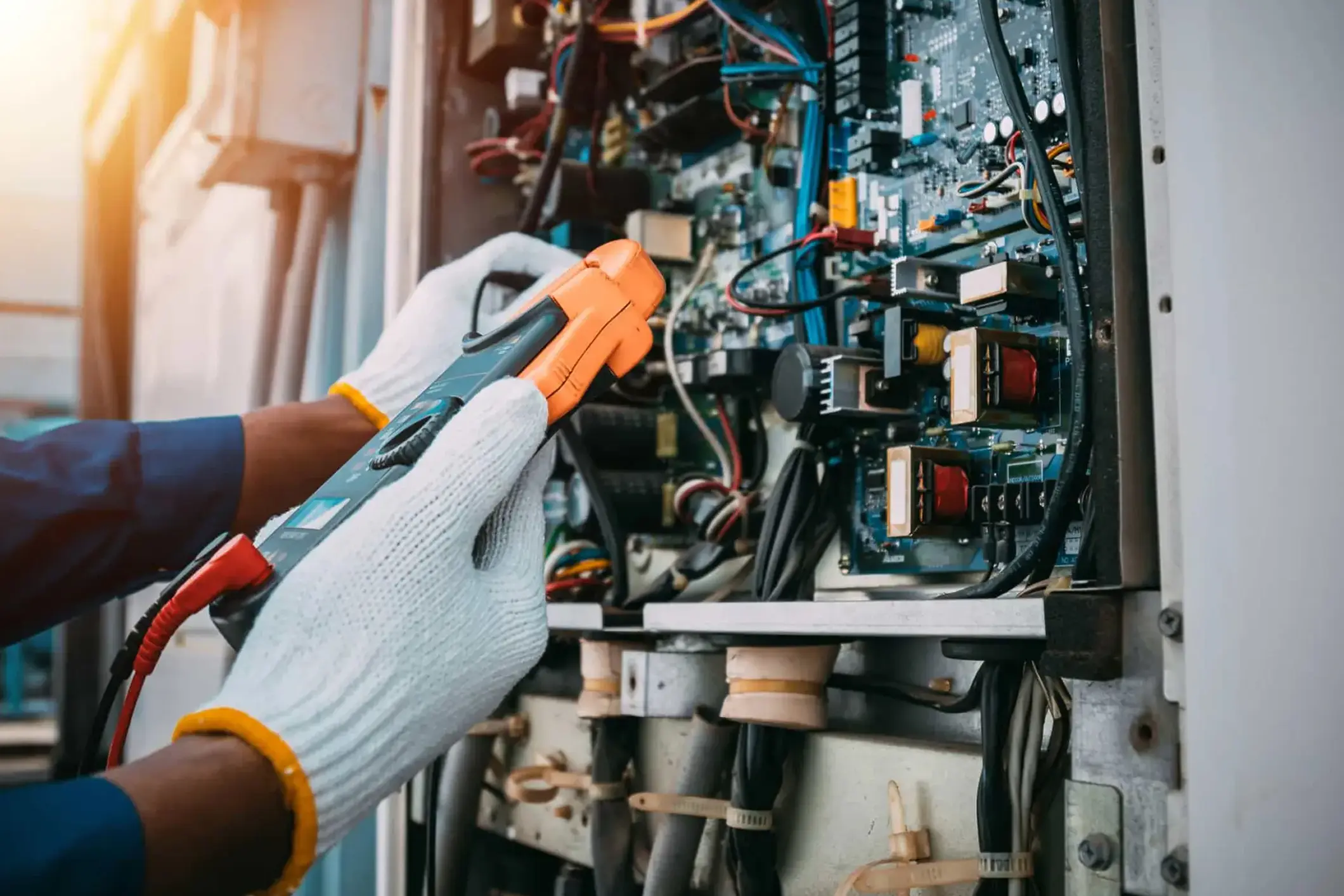
A small electrical business in Massachusetts needs general liability with completed operations, workers compensation as soon as it has employees, and commercial auto and equipment coverage for the van and the tools. Three features of the state shape how a small shop reads that program.
What insurance does a small electrical business need in Massachusetts?
The core is the same as for any electrical contractor. General liability answers the third-party injury and property damage that electrical work can cause, including a fire that starts after the job. Workers compensation answers injuries to your crew. Commercial auto covers the van or truck, and contractors equipment covers the testers, benders and wire that ride in it.
Our Massachusetts page and the Massachusetts cost guide cover the state’s licensing, climate and cost drivers in full. This post does something narrower: it takes the state’s facts and asks what a small shop in particular should do with them.
Does the master electrician permit rule change what a small shop should insure?
Only a licensed master electrician may obtain an electrical permit in Massachusetts. The state licenses electricians through the Board of State Examiners of Electricians, with apprentice, journeyman and master levels, plus systems (low-voltage) licenses. For a small shop, that rule points to one name: the master who pulls the permits.
Massachusetts also issues systems (low-voltage) licenses alongside the electrician ladder. If your shop does that kind of work, tell the agent so the description of the business covers it, and see our post on insurance for sign, alarm and low-voltage contractors for what to bring to that conversation.
Insurance does not replace that license, and it cannot stand in for it. What you can do is understand the dependence. Know who holds the master license for the business, tell your agent who that is, and keep the policy’s description of the business consistent with the license. If the master is also working on the ladder, the same person may be both the license the business depends on and a worker on the comp side, which is worth saying out loud to the agent. Our post on whether electricians need a license covers the licensing framework.
How does older housing change a small shop’s liability?
Massachusetts has an older housing stock, and its pre-war and early-twentieth-century homes sustain steady rewiring and panel-upgrade demand. That is a good source of work for a small shop that does service and remodel, and it is also work with a long completed-operations tail.
A panel upgrade or rewire in an older home keeps carrying load after you have left, and the liability for a fire that starts later sits on the completed-operations side of your general liability. A small shop does not have a large book to spread that exposure across, so the terms matter: ask your agent how completed operations is written and what the policy excludes for your own finished work. Our post on the your-work exclusion explains the exclusion.
What should a small shop know about workers compensation in Massachusetts?
Massachusetts is a private-market state for workers compensation, so an electrical contractor places comp with a private carrier and not through a state fund. For a trade with electrocution, arc-flash and fall exposure, the classifications and the sizing of employers liability matter.
For a small crew, a single serious injury is a large share of the whole record. That makes the classification of your payroll and the employers liability limit worth reading, and it makes the safety habits the carrier will ask about more than a formality. Our post on how class codes and mods work explains the rating system without quoting numbers.
How do storm and solar demand swings affect a small shop?
Coastal nor’easters drive storm-restoration work in Massachusetts, and a statewide push into rooftop solar keeps solar-and-storage interconnection wiring in steady demand. Both can change a small shop’s year. A storm can fill the calendar quickly, and a solar program can bring new kinds of jobs.
A shop that works on older wiring does well to keep written procedures and photographs of finished work. Those records help an underwriter see how the shop manages its risk, and they help the shop if a completed-operations question comes up later.
Surges are where small shops add people: a temporary helper, a subcontracted electrician, a rented lift. Each one changes who is on site and what the policy has to answer. Tell your agent before the surge, not during it, so workers compensation, hired and non-owned auto and the liability terms match the crew that is actually working. Keep the payroll split and the classification in step with who is actually working.
Real-World Scenario: A small electrical shop in the Boston area does panel upgrades and rewires in older homes. After a coastal storm, the owner brings in a subcontracted electrician and rents a lift for a week of restoration work. Because the owner had told the agent a surge might happen, the agent had already explained that the subcontractor’s status needs to be documented and that the rented lift raises a question for the equipment policy. The week’s work goes ahead without the owner finding out afterward that the extra hands and the borrowed equipment were outside the program.
How should a small shop think about the van and the tools?
A small shop can run on a single van with every tool and test instrument riding in it. Treat that as two separate questions. The vehicle is a commercial auto question, and the gear in the bed is a contractors equipment question. Our post on work trucks and electrical companies explains the auto side, and the post on the electrical equipment insurance policy explains the gear.
Tell the agent where the vehicles are kept overnight and which city you work from. The state’s metros include Boston, Worcester, Springfield, Cambridge and Lowell, and the garaging location and the area you cover are part of how the auto policy is written. Do not leave that out because it seems obvious to you.
Does the shop’s size change the conversation with the agent?
It changes what the agent asks about. A small shop has fewer employees, fewer vehicles and a shorter contract list, so each fact carries more weight. The agent will ask who the master is, what the shop does and does not do, how the crew is trained and how finished work is documented.
Answer those questions in specifics, and keep your answers in writing, so the application, the policy and the shop’s own records all describe the same business. If the master is out for a stretch, ask the agent whether anything in the program changes, and write the answer down so the question is settled before it comes up on a job. A small shop that can describe its work clearly gives the agent what it needs to present the account well, and that is true in Massachusetts as much as anywhere else.
How does a small shop keep its program in step with growth?
Growth in a small shop arrives in steps. The first employee changes workers compensation. A second van changes the auto schedule. A larger commercial customer changes the contract paperwork. Each step is small, and the program drifts if no one carries the change to the agent.
Keep a short note of what changed and when, and send it to the agent as it happens. Ask at each step whether the equipment list, the payroll split and the contract exhibit still match the policy. A small shop that does this once a quarter will not be surprised at renewal, and it will not discover at claim time that the policy describes a business that no longer exists.
What should a small shop ask before it buys?
These five questions are a good starting list:
- How is completed operations written, and what is excluded for finished work?
- How will payroll be classified, and what is the employers liability limit?
- Which vehicles and drivers are on the auto policy, including hired and non-owned?
- Which tools and test gear are listed on the equipment policy?
- Does the policy describe every kind of work the shop performs, including any low-voltage work?
What is the next step?
Bring your work mix, your payroll split and the name of the master electrician who holds your license, and send them with a quote request. We read the Massachusetts specifics first and build the program around them. The coverage overview shows how each line fits.