Insurance by market segment
Power Line Contractor Insurance
Insurance for power-line and utility-adjacent electrical contractors — overhead and underground line work, right-of-way, substation and switchgear, and storm restoration. The severity segment, where arc-flash and electrocution workers compensation, the bucket-truck fleet, and the high umbrella limits utilities and prime contracts demand lead the program.
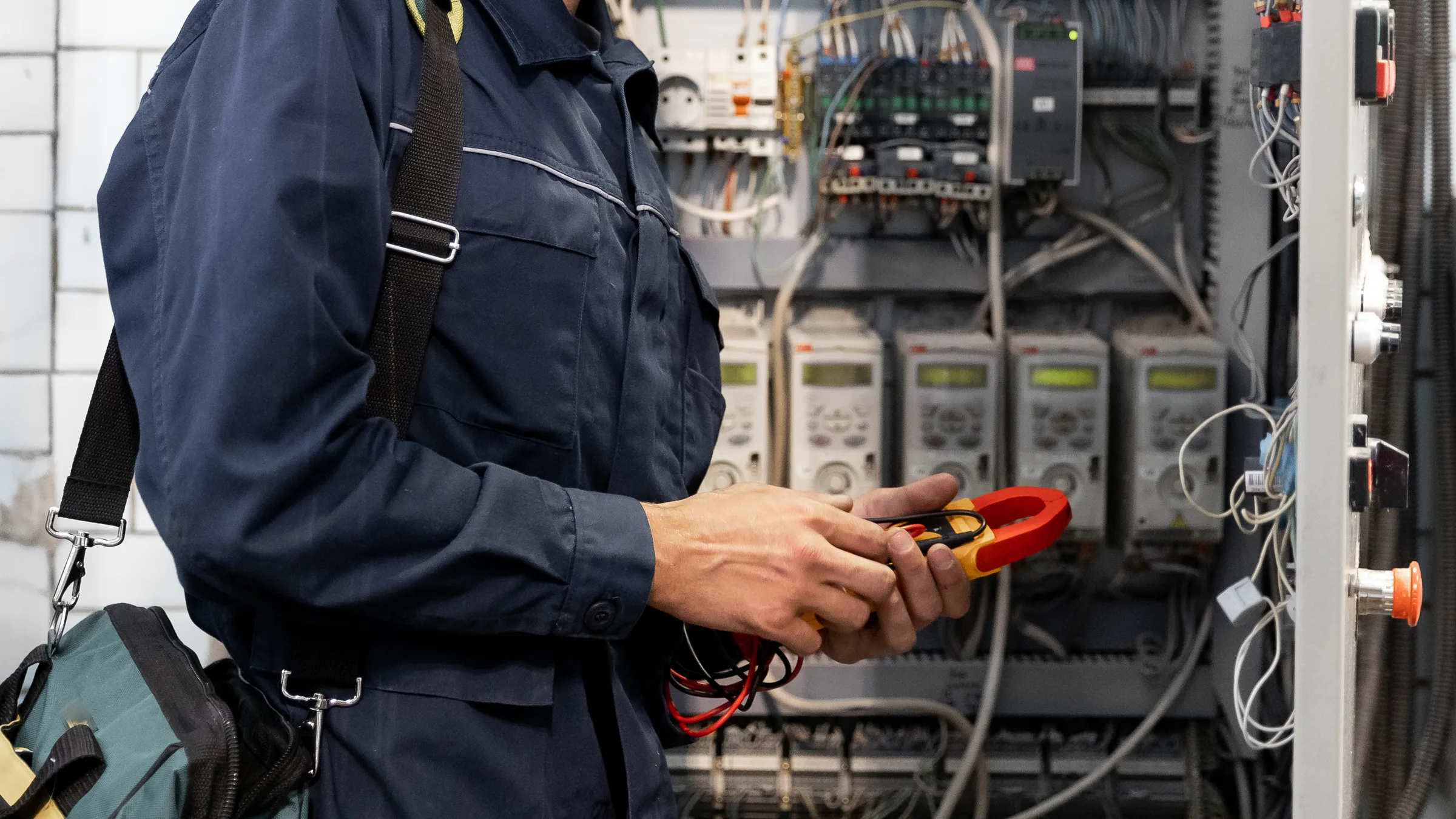

Power-line work is the severity end of the electrical trade, and that is the single thing that sets its insurance apart. A line contractor puts crews on and around energized transmission and distribution systems — overhead conductors on poles and structures, underground cable in duct banks and vaults, substation and switchgear equipment, and the whole right-of-way in between — at height, in weather, and often against the clock during a storm restoration. The failure modes are electrocution and arc-flash, the most severe outcomes there are, and the workers-compensation classifications that describe line work sit at the top of the hazard scale. So this pillar does not lead with a completed-work fire tail the way the shop-and-service pillars do; it leads with the crew, the fleet, and the limits — because that is where the exposure and the money actually are.
That severity reshapes the whole program. Workers compensation is the highest-stakes line a line contractor carries, because a single arc-flash or electrocution loss is catastrophic and the classification rates at the severe end. Right behind it sits umbrella liability, because utilities, prime contractors, and public project contracts routinely demand excess limits well above a primary policy — the certificate you hand a utility has to meet a number the contract sets. And commercial auto carries the bucket trucks, line trucks, and digger derricks that a line operation runs every working day. General liability, contractors equipment, professional liability, and commercial property all matter, but they follow the three that define the segment.
The crew seam is worth stating up front, because it is the one owners get backwards most: your own lineman electrocuted or arc-flashed on an energized circuit is a workers compensation claim, not a general-liability one. General liability answers third parties — the public and the property that is not yours; workers compensation answers your crew. On line work, where the severity is at the extreme end, that distinction is not academic — it is the difference between the coverage that answers a lineman’s catastrophic injury and the one that does not.
This page covers how power line contractor insurance is built for the severity segment — what makes it different, the work it covers, how licensing and location bear on it, the severity-first coverage stack, what moves cost, and how carriers underwrite it. It is not the occupied-home service model, and it is not the commercial-and-industrial systems model. If your work is service and remodel wiring in occupied homes, the Residential Electrical Insurance page leads with that exposure; if it is new construction, alarm systems, industrial work, and design-build, the Commercial & Industrial Electrical Insurance page is built around that. Many contractors do more than one, and each scope is rated on its own terms.
What makes power line contractor insurance different
The defining trait of this segment is severity concentrated in three places at once — the crew, the fleet, and the contract limits — and it is a different risk shape than any other electrical operation.
The first is the crew on energized systems. Line work is done on and near transmission and distribution voltages that leave no margin for error, and the discipline of the trade is built around it: energized (hot) work under strict procedure where the system cannot be taken down, de-energized work under lockout and grounding where it can, minimum approach distances, and cover-up. When that discipline fails, the outcome is electrocution or arc-flash — and that is why the workers-compensation exposure on line work is not comparable to a shop electrician’s. The severity is at the top of the scale, and it drives everything downstream, from classification to the employers-liability limit to how a carrier reads your safety program.
The second is the fleet. A line operation is a rolling one — bucket trucks and aerial devices, line trucks, digger derricks that set poles, pole trailers, reel trailers, and pickups that carry the crew and material to a right-of-way that is often nowhere near a shop. That fleet is a core commercial auto exposure in its own right, and the specialized equipment mounted on the trucks adds an equipment dimension the shop-and-service pillars simply do not carry to the same degree.
The third is the contract. Line contractors work for utilities and as subs on public and infrastructure projects, and those contracts dictate the insurance terms — high limits, additional-insured status, and requirements a utility will not waive. The excess limits a prime contract demands are frequently the reason an umbrella is on the program at all, and getting the tower right is what keeps a coverage requirement from costing you the award.
The work this covers
The power-line segment holds several kinds of utility and line work that share one risk profile — a crew on energized systems, a specialized fleet, and utility-grade contract limits. These are the operations that live within this pillar:
- Overhead and underground line work. Building and maintaining the distribution and transmission systems themselves — conductors on poles and structures overhead, and cable in duct banks, vaults, and trenches underground — the core of what a line contractor does.
- Right-of-way and utility-adjacent work. Work along the right-of-way (ROW) and the utility-adjacent scope around it — clearing, access, and the coordination that line work along a utility corridor demands.
- Substation and switchgear work. Work in substations and on switchgear — high-voltage equipment where the energized exposure and the precision of the work both run high.
- Storm response and restoration. Emergency storm response and restoration — crews mobilized on short notice, often traveling and working long hours in bad conditions to bring systems back, a distinctive travel and fatigue exposure of the trade.
- Utility maintenance contracts. Ongoing maintenance and service contracts with utilities and large owners — recurring, contract-governed work that carries the utility’s insurance requirements with it.
Service and remodel wiring and new-construction, alarm, industrial, and design-build work are the residential and commercial-and-industrial pillars, not this one; if your operation runs those alongside line work, each scope is underwritten on its own terms.
State and regulatory considerations
What shapes power-line risk by location is licensing, worker safety, and how workers compensation is bought — and all three vary by state. Electrical licensing is not uniform: many states license electricians as journeymen and masters, some regulate line and utility work through a separate contractor classification, some handle it at the local level, and the exact structure differs state to state. We speak to that honestly per state rather than inventing a rule or a license code that does not exist, and where a state licenses the trade we name the real board rather than fabricating a citation. Worker safety runs through OSHA — the electrical and power-line standards that govern energized work, minimum approach distances, and fall protection — and through the NFPA arc-flash and electrical-safety standards a careful line operation runs its energized-work program around. Carriers expect a line contractor to have documented safety practices, given a crew working on energized systems at height.
Workers compensation is bought differently depending on the state. In most states you buy it from a private insurer and a specialty panel places it for you, but in four — North Dakota, Ohio, Washington, and Wyoming — you cannot: these are the monopolistic states, where the statutory benefit comes only through the state fund, and where the employers-liability side has to be arranged separately so a line crew is not left with the gap open. That matters for a line contractor whose crews cross state lines for a storm restoration or a prime contract. As our state pages come online we link the licensing, worker-safety, and workers-compensation specifics for the states we serve — including Texas, Florida, Ohio, Pennsylvania, and Indiana — and we write across all 48 licensed states.
Coverage breakdown
Here is the stack a power-line operation carries, weighted for the severity segment. Each line links to its full page, and the order reflects where this trade concentrates its risk — workers compensation on the crew, umbrella on the contract limits, and commercial auto on the fleet leading the program.
- Workers Compensation Insurance — the lead line for this segment. Medical and lost-wage coverage, plus the employers-liability protection behind it, for a crew on energized transmission and distribution systems where electrocution and arc-flash put line work among the highest-severity classifications there is. Your lineman’s on-the-job injury is answered here, not by general liability — the crew seam that defines the pillar. Includes honest handling of the monopolistic state-fund states.
- Umbrella Liability Insurance — excess limits above general liability, commercial auto, and the employers-liability layer, for the higher limits utilities, prime contractors, and public project contracts demand of a line contractor. The umbrella adds height over the underlying policies; it does not change what they cover. On line work it is frequently a contract requirement rather than an option.
- Commercial Auto Insurance — auto liability and physical damage for the bucket trucks, line trucks, digger derricks, and trailers that move a line crew and its material to the right-of-way. The trucks are commercial auto, not general liability; the specialized gear mounted on them is often contractors equipment rather than auto physical damage — a seam we read so the boom on the truck is not left in a gap.
- General Liability Insurance — third-party bodily injury and property damage from the operation: harm to the public and to property that is not yours. It answers the harm your work causes others, not your own crew (workers compensation) and not the cost of redoing your own failed work — the completed-work exclusions treat rework of your own installation as a business cost, not a covered claim.
- Contractors Equipment Insurance — inland marine cover for the tools and equipment a line contractor owns, including the aerial device, boom, winch, and digger mounted on the trucks and the material staged on a job. General liability answers the harm you do to others; this line answers your own equipment — the mounted gear rather than the truck it rides on.
- Professional Liability Insurance — errors-and-omissions cover for any design, engineering, or specification judgment in the work. General liability answers faulty workmanship that causes injury or damage; a professional judgment that causes purely financial loss is this line instead — the seam that matters if your scope includes design-build or engineered utility work.
- Commercial Property Insurance — coverage for the yard, shop, or office you operate from and the materials you own inside it. It is the building-and-premises line, cut from contractors equipment by what moves: property covers what stays put, equipment covers what travels — and a fire at your own yard is property, not the third-party harm general liability answers.
What power line contractor insurance costs
Premium tracks the operation, not a sticker price, and this segment has its own drivers. The ones that move it most start with payroll and the line-work classifications — a crew on energized systems is a high-severity workers-compensation class, and the classification your payroll sits under is the single biggest lever on the program. The contract limits utilities and prime contractors demand come next, because a program built to a high umbrella limit is a different program than one built to a base layer. The fleet is a third — the bucket trucks, line trucks, and digger derricks, and the equipment mounted on them. Storm response adds a travel and mobilization exposure, and your claims history and safety record fold in through the experience modification that follows a line operation year to year. We price to that real picture and stand behind any figure we give — verified numbers come from us directly, never a rate or a limit invented for a web page.
Claims scenarios
These are plausible power-line claim categories, described qualitatively and with generic carrier language — every claim is handled by the carrier, never named here — and with no fabricated cost, frequency, or loss figures.
- A lineman is arc-flashed on an energized circuit. A crew member burned by an arc-flash event, or shocked, during energized work on a distribution or transmission system — a catastrophic injury answered by workers compensation, the highest-severity exposure the trade carries, not general liability.
- A bucket truck is in an accident during storm response. A line truck carrying a crew and material to a restoration is in an at-fault road accident — a commercial auto claim, distinct from the work at the pole and from the equipment mounted on the truck.
- Energized work harms a third party. A fault or an arc during live work injures a bystander or another crew, or damages property that is not yours — the third-party exposure general liability is built to answer, separate from the injury to your own lineman.
- A prime contract calls for limits above the primary layer. A utility or prime contractor requires excess limits the base policies do not reach, and the umbrella provides the height so the certificate meets the contract rather than falling short of it.
Underwriting realities
Carriers writing power-line work look hardest at the severity and the discipline behind it. The energized-versus-de-energized scope matters — how much of the work is done hot under procedure versus de-energized under lockout and grounding — as does the transmission-versus-distribution mix, since the voltages and the exposure climb together. Storm-chasing and travel are read closely, because a crew mobilized on short notice, far from home, and working long hours in bad conditions is a distinct fatigue and road exposure. The safety program is central: documented energized-work procedures, minimum-approach-distance discipline, grounding, and fall protection are what a carrier expects to see on a line risk. The experience modification is read as the safety story it tells — qualitatively, a record of clean years opens markets and a run of serious losses narrows them — and the prior workers-compensation, auto, general-liability, and equipment history rounds out the file. Well-maintained and properly scheduled equipment opens markets; thin safety documentation or a serious severity loss narrows them. We position your operation to the carriers most likely to want line and utility work rather than sending one generic submission everywhere.
Why Electrical Guard Insurance
We write one class — electrical contractors — and within it we treat power-line work as the severity segment it is. We weight your program toward workers compensation for a crew on energized systems, umbrella liability for the limits utility and prime contracts demand, and commercial auto for the bucket-truck and line-truck fleet, with general liability, contractors equipment, professional liability, and commercial property behind them. We classify the payroll to the line work your crews really do, present your energized-work and de-energizing discipline to underwriters as the safety story it is, read the employers-liability limit rather than default it, handle the monopolistic states — North Dakota, Ohio, Washington, and Wyoming — honestly, and build the excess tower to what your contracts actually require. Start with a quote, or talk it through with us first.
Learn more
Power-line work is one of three market segments we write, and the coverage stack shifts with the work. The lead exposures for this segment live on the workers compensation page, for the crew on energized systems, the umbrella liability page, for the limits utility contracts demand, and the commercial auto page, for the bucket-truck and line-truck fleet. If your work is service and remodel wiring in occupied homes, the Residential Electrical Insurance page leads with that exposure; if it is new construction, alarm systems, industrial work, and design-build, the Commercial & Industrial Electrical Insurance page is built around that.
Coverage for electrical contractors
- General Liability Insurance
- Workers Compensation Insurance
- Commercial Property Insurance
- Commercial Auto Insurance
- Contractors Equipment Insurance
- Umbrella Liability Insurance
- Professional Liability Insurance
Insurance by the electrical work you do
- Residential Electrical Insurance
- Commercial & Industrial Electrical Insurance
- Power Line Contractor Insurance
Get covered
Primary sources
Frequently asked questions about Power Line Contractor Insurance
What insurance does a power line contractor need?
The program leads where the severity is: the crew on energized systems, the fleet, and the limits utilities require. Workers compensation is the highest-stakes line, because line work — arc-flash and electrocution on overhead and underground systems — sits among the highest-severity classifications there is. Umbrella liability comes next, because utility and prime contracts routinely demand excess limits above a primary policy. Commercial auto carries the bucket trucks, line trucks, and digger derricks that are central to the operation. General liability answers the third-party harm your work can cause. Around those, contractors equipment covers the tools and the equipment mounted on the trucks, professional liability answers any design or engineering judgment, and commercial property covers the yard, shop, and materials you own. It is a heavier, higher-severity weighting than a shop-and-service electrician carries, which is why we rate line work on its own terms.
Why is workers compensation the highest-stakes line for a power line contractor?
Because line work sits at the top of the severity spectrum. Overhead and underground line crews work on and around energized transmission and distribution systems, at height, in weather, and during storm restoration — and the failure modes are electrocution and arc-flash, the most severe outcomes in the trade. Workers-compensation classifications sort employers by the hazard of the work, and line work rates at the severe end of that scale — not a marketing claim, but how the rating system treats the exposure. That is why the crew is where a line operation is most exposed, why the employers-liability limit behind the statutory benefit is worth reading rather than assuming, and why a documented energized-work and de-energizing program matters so much to how the coverage is written and priced. We describe the severity honestly and qualitatively, without quoting a rate or a class-code number.
My utility contract requires very high liability limits — what covers that?
That is umbrella liability, and on power-line work it is rarely optional. Utilities, prime contractors, and public project contracts often require limits well above what a primary general liability or commercial auto policy carries, and an umbrella sits excess of those underlying policies to add the height the contract demands — it can also sit above your employers-liability limit. Umbrella does not change what is covered; it adds limit over the policies beneath it. Whether an umbrella is required, and at what limit, depends on the contracts on your books — which is what we read before binding, so the certificate you hand a utility matches what the contract actually calls for rather than falling short of it.
Are my bucket trucks and line trucks covered by general liability or commercial auto?
The trucks are commercial auto. Bucket trucks, line trucks, digger derricks, and the pickups and trailers that move a line crew and its material run through commercial auto — the at-fault accident, the physical damage, and the auto liability on the road are all answered there, not by general liability. There is one honest seam worth drawing: the specialized equipment mounted on those trucks — the aerial device, the boom, the winch, the digger — is often covered as contractors equipment rather than as part of the auto physical-damage limit, depending on how the policy is written. General liability answers the work and the harm it causes; commercial auto answers the vehicles; contractors equipment answers the mounted gear. We read the fleet and the mounted equipment together so the boom on the truck is not left in a gap between two policies.
I do line work in Ohio (or North Dakota, Washington, or Wyoming) — how do I buy workers compensation?
Those four states — North Dakota, Ohio, Washington, and Wyoming — are the monopolistic states. In them, the statutory workers-compensation benefit is bought through the state fund rather than from a private insurer, so a private specialty panel does not place that Part One benefit for you there. It matters on line work because the employers-liability side (Part Two) is handled differently in a monopolistic state — often through a separate stop-gap endorsement on another liability policy rather than as part of a private workers-compensation policy — and on high-severity line work that gap is exactly the coverage a serious loss reaches. We work through it honestly: where the state fund applies we say so plainly, and we make sure the employers-liability protection is arranged so a line contractor working in Ohio or the other three is not left exposed.
Does general liability cover my lineman who is electrocuted or arc-flashed?
No — and it is the seam a line contractor should understand cold. An injury to your own employee — an electrocution, an arc-flash burn, a shock, or a fall from a pole or a bucket — is a workers compensation claim, not a general-liability one. General liability answers third-party bodily injury: the people who are not your crew, and the property that is not yours. Workers compensation answers your crew — and for line work, where energized transmission and distribution puts a crew among the highest-severity classifications there is, it is the highest-stakes line in the program. The two are written together and work together, but they answer different injuries: general liability for the third-party harm your work can cause, workers compensation for your own linemen on the job.
Power line contractor insurance in your state
Electrical licensing, OSHA and NFPA safety posture, and how workers compensation is bought — including the monopolistic state funds in North Dakota, Ohio, Washington, and Wyoming — all vary by state, and they matter for a line crew that travels for a storm restoration or a prime contract. As our state pages come online we write the licensing, safety, and workers-compensation specifics for each; we serve line contractors across all 48 licensed states.
Get power line contractor insurance built for the severity
Tell us about the line work you do — overhead and underground, substation, storm restoration, utility maintenance — and we will classify the crew to the real work, build the excess tower to what your contracts demand, and place it with carriers that write the class.