
Electrical insurance by state
Electrical Contractor Insurance in Texas
Two things set a Texas electrical program apart before a policy is written: a genuinely licensed trade — TDLR runs an Apprentice-through-Master ladder, with a dedicated lineman class — working in the one state where employers can opt out of workers comp, over a storm-stressed grid where a connection that fails after the job can start a fire in a finished building.
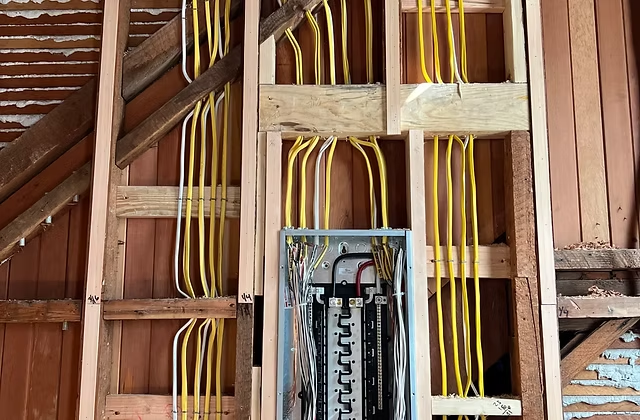

Electrical work in Texas is shaped by a combination no other state puts together the same way. It is a genuinely licensed trade — the Texas Department of Licensing and Regulation (TDLR) runs a full Apprentice-through-Master ladder, with dedicated lineman and industrial classes, so the credential a general contractor checks is real — and it sits in the one state where an employer can legally opt out of workers compensation entirely. Over that regulatory picture runs a distinctive physical exposure: a large, fast-growing, storm-stressed grid, where a connection, panel, or circuit that fails after the job can start a fire in a finished building, and where power-line and utility work rides a hard storm-and-restoration cycle. Put those together and a Texas electrical program carries weight — on the coverage and on the contract — that a generic business policy never anticipates.
This page walks the Texas-specific realities an electrical program has to answer for: what actually drives cost here, the TDLR licensing picture and the non-subscriber workers-comp decision, the completed-operations fire and severity exposures the state’s work creates, the claims we see, and the major markets across the state. The coverage lines themselves — general liability, workers compensation, commercial auto, contractors equipment, commercial property, umbrella, and professional liability — are covered in depth on their own pages; here the focus is how Texas changes the emphasis.
What Electrical Contractor Insurance Costs in Texas
There is no single Texas price, because premium is driven by your operation, not your ZIP code alone. The cost drivers that matter most here:
- Payroll, crew classifications, and the comp decision. Payroll is the base the workers-compensation exposure is rated on — and because Texas lets you run as a non-subscriber, whether you carry comp at all is the single biggest coverage decision, and cost lever, in the state. Line and energized-work classifications rate very differently from residential service.
- The work mix. Residential service, commercial and industrial systems, and power-line work each carry a different completed-operations and severity profile, and each prices differently.
- Design-build and specification work. A contractor who designs or specifies systems carries a professional-liability exposure — and an underwriting question — that a pure-install shop does not.
- Fleet and territory. A power-line operation running bucket and line trucks across a restoration territory looks different to an underwriter than a metro service shop, both on commercial auto and on the umbrella limits its contracts demand.
- Claims history and contract requirements. Prior losses and the additional-insured and limit terms your general-contractor and utility work demand both move the number.
We price to the real operation rather than quoting a figure off the state name.
For a closer look at how these drivers shape a quote, read our Texas electrical contractor insurance cost guide.
Texas Electrical Regulations & Licensing
Texas licenses electricians statewide through the Texas Department of Licensing and Regulation (TDLR), which issues a tiered progression — Apprentice, Residential Wireman, Journeyman, and Master Electrician, with dedicated Journeyman Lineman and Journeyman Industrial classes — and a separate Electrical Contractor business license. Non-exempt electrical work in the state must be performed through a licensed electrical contractor.
The practical effect for an electrical program is that in Texas a real state license and the certificate of insurance work together. The TDLR credential says you are qualified to do the work; the general contractor, developer, utility, or building owner still leans on your coverage, your limits, and your additional-insured endorsements to decide whether to let you on the job — which is why the general liability program and its additional-insured endorsements matter so much here.
The non-subscriber workers-comp reality. Texas is the one state where workers compensation is generally elective rather than mandatory for most private employers — the non-subscriber system (Texas Labor Code §406.002). An electrical business may legally opt out, but a non-subscriber gives up the common-law defenses comp normally provides and is exposed to direct employee-injury suits — which matters in a trade with electrocution, arc-flash, and fall exposure. Many general contractors and utilities require comp regardless. Texas is not monopolistic, so when comp is carried it is placed with a private carrier. Because a crew works around energized circuits, arc-flash hazards, and — on the power-line side — some of the highest-severity exposure in any trade, the non-subscriber decision is one of the most consequential coverage choices a Texas electrical contractor makes — we walk through it against your crews and your contracts on the workers compensation page rather than treating it as optional fine print.
Common Electrical Risks in Texas
A large, storm-exposed grid drives Texas electrical demand: the February 2021 winter storm that strained the state grid pushed standby-generator, transfer-switch, and service-upgrade work; summer heat loads attic and rooftop conduit runs; and Gulf-coast hurricane and wind events drive rebuild and restoration wiring. It is also a heavy solar and EV-charger install market. Power-line and utility-adjacent work rides the same storm and restoration cycle. That grid-driven demand, plus the energized and power-line work a large and growing state generates, drives the exposures underwriters key on:
- Completed-operations fire. A panel, connection, or circuit — installed or serviced — that fails downstream, after the work is complete, and starts a fire in a finished building — the products-completed-operations claim this trade turns on, and the signature Texas exposure given the scale and the grid.
- Energized-work third-party harm. On live work, an arc, fault, or surge that injures a bystander or damages a customer’s equipment — answered on the general liability side.
- Electrocution and arc-flash severity. The workers-compensation exposure the non-subscriber option makes uniquely fraught in Texas, and the severity that puts power-line work at the top of the classification spectrum.
- Fleet and storm exposure. The bucket-truck and line-truck fleet, and the restoration work that follows a grid or storm event — a commercial-auto and umbrella emphasis on the utility side.
Common Texas Electrical Claims We See
Described qualitatively, with generic carrier language — every claim is handled by the carrier, never named here, and with no fabricated figures:
- The completed-operations fire loss. A panel or connection serviced months earlier that overheats and starts a fire in a finished building, damaging property that is not the contractor’s — a completed-operations claim the carrier answers under general liability, and the Texas signature.
- The non-subscriber injury suit. An electrician shocked or burned in an arc-flash event where the business had opted out of comp, turning what would elsewhere be a workers-comp claim into a direct employee-injury lawsuit — the exposure the non-subscriber decision creates.
- The bucket-truck road loss. A line or bucket truck in an at-fault accident during storm-restoration travel — a commercial-auto claim, distinct from the work itself.
Why Texas Electricians Choose Electrical Guard Insurance
We write one class — electrical contractors — and we place coverage with carriers that actually want the work. In Texas that focus shows up in the questions we ask before we quote: whether you carry comp or run as a non-subscriber, and how that squares with your contracts; whether you run residential service, commercial and industrial systems, or power-line work, and how much of your book carries the completed-operations fire tail; whether you do design-build and carry the professional exposure the standard policy does not answer; and whether your general liability carries the completed-operations and additional-insured terms a Texas general contractor or utility will demand alongside your TDLR license. When a certificate request lands on your desk with requirements you do not recognize, that is a call we take.
Major Texas Electrical Markets
Texas is not one electrical market but several, each with its own exposure and operating profile:
Dallas–Fort Worth
The state’s largest commercial and industrial electrical market: data-center construction, corporate campuses, and I-35 growth push new-construction and design-build electrical at volume, so the completed-operations fire tail on finished systems lands alongside the additional-insured and wrap-up demands of general-contractor work — on the crews doing the most volume in the state.
Houston and the Gulf Coast
The energy corridor concentrates heavy industrial and maintenance electrical, and hurricane- and wind-driven restoration wiring rides the coast — work that raises both the severity end of the operation and the contract-limit and umbrella demands that come with large industrial accounts.
Austin
Hill Country tech and semiconductor-fabrication growth adds high-value commercial systems, cleanroom and controls work, custom homes, and a heavy solar and EV-charger book — where design-build and specification work raises the professional-liability exposure a pure-install contractor does not carry.
San Antonio
Rapid I-35-corridor growth pushes new-construction residential and commercial electrical, military and institutional work, and multi-unit fit-out — so new-system completed-operations exposure and the additional-insured demands of general-contractor work land on the same crews.
El Paso and West Texas
A high-desert and energy-infrastructure market where oilfield-adjacent, utility-scale solar, and power-line work drive the book — a severity and commercial-auto profile, with the bucket-truck fleet and the high umbrella limits utility and prime contracts demand, that shifts the claim pattern away from the shop-and-service metros.
The 2021 freeze legacy
The February 2021 winter storm strained the state grid and left a lasting mark on the work: standby-generator installs, transfer switches, and service upgrades became a real book of business, a reminder that a Texas electrical program carries a grid-event tail — and that completed work has to hold through the next event.
Related reading
Coverage for a Texas electrical business works as a system. The lines that carry the most weight here are general liability (the completed-operations fire tail on finished work) and workers compensation (the non-subscriber decision and the arc-flash severity), alongside commercial auto, contractors equipment, commercial property, umbrella liability, and professional liability for design-build and consulting work. How the program is written also differs by the electrical work you do across the three service pillars.
Coverage for Texas electricians
- General Liability Insurance
- Workers Compensation Insurance
- Commercial Auto Insurance
- Contractors Equipment Insurance
- Commercial Property Insurance
- Umbrella Liability Insurance
- Professional Liability Insurance
The electrical work you do
- Residential Electrical Insurance
- Commercial & Industrial Electrical Insurance
- Power Line Contractor Insurance
Get covered
Texas sources
Frequently asked questions about electrical insurance in Texas
Do electricians need a license in Texas?
Yes. Texas licenses electricians statewide through the Texas Department of Licensing and Regulation (TDLR), which runs a tiered ladder — an Apprentice license, a Residential Wireman, a Journeyman, and a Master Electrician, with dedicated Journeyman Lineman and Journeyman Industrial classes — and a separate Electrical Contractor business license. Non-exempt electrical work in the state must be performed through a licensed electrical contractor, so the credential a general contractor checks is real. We build the insurance program to sit alongside that license, not in place of it.
Does a Texas electrical business have to carry workers compensation?
Texas is the one state where workers compensation is generally elective rather than mandatory for most private employers — the non-subscriber system under the Texas Labor Code. An electrical business can legally opt out and operate as a non-subscriber, but doing so gives up the common-law defenses comp normally provides and exposes the business to direct employee-injury lawsuits — which matters in a trade with electrocution, arc-flash, and fall exposure. Many general contractors, utilities, and project contracts require comp regardless of the state rule. Texas is not a monopolistic state, so when comp is carried it is placed with a private carrier. We read the non-subscriber decision against your crews and your contracts rather than treating it as a box to check.
Why is the completed-operations fire tail such a big exposure for Texas electricians?
Because the work keeps carrying current after the crew leaves. A panel, connection, or circuit installed or serviced today can overheat, arc, and start a fire in a finished building weeks or months later — and when it does, the third-party building and property damage is a completed-operations claim on the general liability side, not a simple callback. A large, fast-growing, storm-stressed state generates a deep book of exactly that finished-work exposure, which is why a Texas electrical program has to be built with the fire-shaped long tail in mind rather than priced as if the work were ordinary service.
What coverage does a power-line or utility contractor need in Texas that a residential shop might not?
A power-line and utility-adjacent contractor — TDLR even licenses a dedicated Journeyman Lineman — runs at the severe end of the trade: arc-flash and electrocution exposure that puts line work among the highest-severity workers-compensation classifications, a bucket-truck and line-truck fleet that drives the commercial-auto book, and utility and prime contracts that demand high umbrella limits. The core stack is the same statewide, but the power-line emphasis shifts weight toward workers compensation, commercial auto, and umbrella — a different program from a Dallas residential service shop.
How much does electrical contractor insurance cost in Texas?
There is no single price, because premium is driven by your specific operation. In Texas the biggest factors are your payroll and crew classifications, whether you carry comp at all given the non-subscriber option, your mix of residential service, commercial and industrial systems, and power-line work, whether you do design-build, your service- and bucket-truck count and values, and your prior claims history. A residential service shop, a commercial and industrial contractor, and a power-line operation each look very different to an underwriter. We price to the real operation rather than a figure off the state name.
Do you write electrical insurance across all of Texas?
Yes. Electrical Guard Insurance places coverage for electrical contractors across Texas — from the Dallas–Fort Worth commercial-and-industrial market and the Houston energy corridor to Austin, San Antonio, and El Paso — and across the rest of the 48 states we serve. We write residential service electricians, commercial and industrial contractors, and power-line contractors, matched to how the operation actually runs in its part of the state.
Get a quote for your Texas electrical business
Tell us where in Texas you work, whether you carry comp or run as a non-subscriber, and the electrical work you do — and we will market it to carriers that write the class.