
Electrical insurance by state
Electrical Contractor Insurance in Massachusetts
Massachusetts gates the electrical permit behind a single credential before a policy is written — only a licensed master electrician may pull one through the Board of State Examiners of Electricians — and sets that trade against one of the oldest housing stocks in the country, where knob-and-tube and older-wiring rewiring runs alongside a strong statewide push into solar-and-storage interconnection, so a contractor is constantly tying new work into old systems that have to hold.
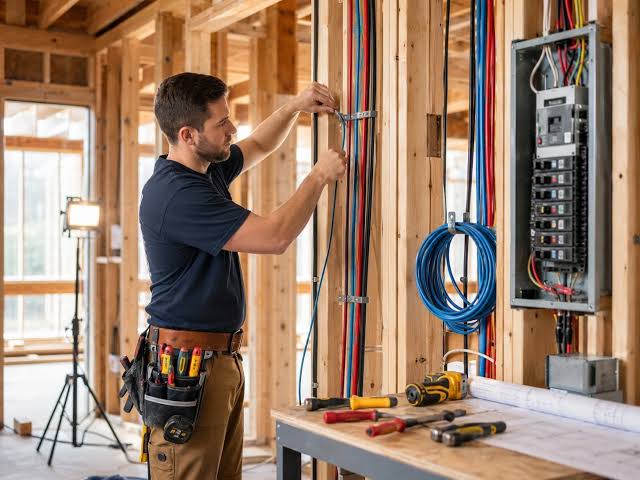

Electrical work in Massachusetts sits behind a permit rule that shapes who can get hired and over a housing base older than almost any in the country. The Board of State Examiners of Electricians licenses journeyman and master electricians and systems (low-voltage) work under one centralized standard, but the decisive fact is the permit: only a licensed master electrician may pull an electrical permit in the Commonwealth. And the trade works over a dense stock of pre-war and early-20th-century homes that sustains heavy knob-and-tube and older-wiring rewiring, while a strong statewide solar push keeps solar-and-storage interconnection in steady demand. Put those together and a Massachusetts electrical program carries a completed-operations weight — a contractor constantly tying new work into old systems, and new interconnection into the grid, all of which has to hold — that a generic business policy never anticipates.
This page walks the Massachusetts-specific realities an electrical program has to answer for: the permit-gated master license, the knob-and-tube and solar book, the workers-comp picture, what actually drives cost here, the claims we see, and the major markets across the state. The coverage lines themselves — general liability, workers compensation, commercial auto, contractors equipment, commercial property, umbrella, and professional liability — are covered in depth on their own pages; here the focus is how Massachusetts changes the emphasis.
The Massachusetts Master License and the Permit
Massachusetts licenses electricians statewide through the Board of State Examiners of Electricians, which issues journeyman and master electrician licenses along with systems (low-voltage) licenses under a single centralized standard. Only a licensed master electrician may obtain an electrical permit in the Commonwealth.
The practical effect for an insurance program is that in Massachusetts the master license unlocks the permit — and the permit is what lets a job be awarded — but the general contractor, developer, or building owner still leans on your coverage, your limits, and your additional-insured endorsements before letting you on the site. The general liability program and its completed-operations and additional-insured terms sit directly alongside the master license here, which is why we build the certificate of insurance to match the way permitted work actually gets awarded.
The Knob-and-Tube and Solar Book
Massachusetts carries one of the oldest housing stocks in the country, and its dense stock of pre-war and early-20th-century homes sustains heavy knob-and-tube and older-wiring rewiring and panel-upgrade demand. Coastal nor’easters drive storm-restoration work, and a strong statewide push into rooftop solar keeps solar-and-storage interconnection wiring in steady demand. That old-and-new picture — legacy rewiring alongside new interconnection — drives the exposures underwriters key on:
- Legacy-wiring completed operations. Tying new circuits into knob-and-tube and dated service panels, where a fault or fire that surfaces after the job raises the question of whose work is responsible — the signature exposure of an aging-stock book, answered on the general liability side.
- Completed-operations fire. A panel, connection, or circuit — installed or serviced — that fails downstream and starts a fire in a finished building, the products-completed-operations claim this trade turns on.
- Solar-and-storage interconnection. High-load ties into the service and the grid, where the completed-operations question is whether the finished interconnection holds, and design work carries a professional exposure.
- Electrocution and arc-flash severity. The workers-compensation exposure that rides every energized job, and the top-of-spectrum severity of any line work.
Workers Compensation in Massachusetts
Massachusetts is a private-market state for workers compensation; an electrical contractor places comp with a private carrier, and for a trade with electrocution, arc-flash, and fall exposure — and, on the power-line side, some of the highest-severity work there is — the classifications and employers’ liability sizing matter. In Massachusetts the way payroll splits across residential rewiring, commercial systems, and solar-and-storage work drives the rating. We read the comp program against the real crew mix on the workers compensation page rather than treating it as a flat filing off the state name.
What Drives an Electrical Insurance Cost in Massachusetts
There is no single Massachusetts price, because premium is driven by your operation, not your ZIP code alone. The cost drivers that matter most here:
- Payroll and crew classifications. The base the comp exposure is rated on, and energized-work classes rate differently from residential service.
- The work mix. Knob-and-tube and legacy rewiring, commercial and institutional systems, and solar-and-storage interconnection each carry a different completed-operations and severity profile.
- Aging-stock service work. A book heavy in older-housing rewiring carries the completed-operations question of new work tied into old systems — an underwriting factor in itself.
- Design-build and specification work. A contractor who designs or specifies systems, including solar, carries a professional-liability exposure a pure-install shop does not.
- Contracts and claims history. The additional-insured and limit terms your work demands, and prior losses, both move the number.
We price to the real operation rather than quoting a figure off the state name.
Claims We See on Massachusetts Electrical Work
Described qualitatively, with generic carrier language — every claim is handled by the carrier, never named here, and with no fabricated figures:
- The legacy-panel dispute. New work tied into knob-and-tube or a dated Massachusetts service panel, where a fault after the job raises a question of whose work is responsible — the kind of claim the state’s old housing generates.
- The completed-operations fire loss. A panel or connection serviced months earlier that overheats and starts a fire in a finished building, damaging property that is not the contractor’s — a completed-operations claim the carrier answers under general liability.
- The interconnection failure. A solar-and-storage connection that faults after the job, raising a completed-operations question on a system tied into the grid at load.
Why Massachusetts Electricians Choose Electrical Guard Insurance
We write one class — electrical contractors — and we place coverage with carriers that actually want the work. In Massachusetts that focus shows up in the questions we ask before we quote: how much of your book is knob-and-tube and legacy rewiring, and what that means for the completed-operations tail; how much is solar-and-storage interconnection, and whether you design or specify those systems; whether you run residential service, commercial and institutional systems, or line work, and how the payroll splits for comp; and whether your general liability carries the completed-operations and additional-insured terms a Massachusetts general contractor or developer will demand alongside your master license and the permit it unlocks. When a certificate request lands on your desk with requirements you do not recognize, that is a call we take.
We would rather understand the book than assume it. For a Massachusetts account that means weighing how much is knob-and-tube and legacy rewiring against how much is solar-and-storage interconnection, how the payroll splits for comp, and whether design or specification work carries a professional exposure the standard policy does not answer — then building the completed-operations and additional-insured terms to match. Because we write electrical contractors as a single class and place them across a specialty panel that wants the work, the certificate a general contractor or developer holds under the master-permit system answers their requirements the first time out. That is the difference between a policy keyed to the state name and a program written for how a Massachusetts electrical business actually runs its old-and-new book.
Major Massachusetts Electrical Markets
Massachusetts is not one electrical market but several, each with its own exposure and operating profile:
Boston
The state’s core market pairs some of the oldest urban housing in the country with high-value institutional, medical, and commercial construction, so a contractor here runs both knob-and-tube and legacy rewiring and premium finished systems — two completed-operations profiles on the same book.
Worcester and central Massachusetts
A manufacturing legacy, college campuses, and older triple-decker housing keep industrial service and dense residential rewiring steady, where tying new work into aging service panels is routine and raises the completed-operations question on both ends.
Springfield and the Pioneer Valley
Older mill-city housing and institutional and healthcare construction mix legacy rewiring with high-value finished systems, and a strong regional solar push adds interconnection work — a completed-operations and professional-liability profile for design-build contractors.
Cambridge and the innovation corridor
Biotech, university, and data-center construction concentrate high-value commercial systems and controls work, where design-build and specification raise the professional-liability exposure a pure-install contractor does not carry, on some of the highest-value finished systems in the state.
Lowell and the northern cities
A dense stock of pre-war and early-20th-century mill housing sustains heavy rewiring and panel-upgrade demand, a legacy-wiring completed-operations profile distinct from the new-construction metros.
The knob-and-tube belt
Beneath every metro sits one of the oldest housing stocks in the country, a statewide belt of knob-and-tube and legacy rewiring that underlies almost every Massachusetts book — the constant completed-operations question of new work tied into old systems, running beneath the solar and new-construction work above it.
Related reading
Coverage for a Massachusetts electrical business works as a system. The lines that carry the most weight here are general liability (the completed-operations tail on legacy and interconnection work) and workers compensation (the crew classifications and the energized-work severity), alongside commercial auto, contractors equipment, commercial property, umbrella liability, and professional liability for design-build and solar-specification work. How the program is written also differs by the electrical work you do across the three service pillars.
Coverage for Massachusetts electricians
- General Liability Insurance
- Workers Compensation Insurance
- Commercial Auto Insurance
- Contractors Equipment Insurance
- Commercial Property Insurance
- Umbrella Liability Insurance
- Professional Liability Insurance
The electrical work you do
- Residential Electrical Insurance
- Commercial & Industrial Electrical Insurance
- Power Line Contractor Insurance
Get covered
Massachusetts sources
Frequently asked questions about electrical insurance in Massachusetts
Do electricians need a license in Massachusetts?
Yes, statewide. Massachusetts licenses electricians through the Board of State Examiners of Electricians, which issues journeyman and master electrician licenses along with systems (low-voltage) licenses under a single centralized standard. The key distinction is the permit: only a licensed master electrician may obtain an electrical permit in the Commonwealth. We build the insurance program to sit alongside that credential, naming the contracting entity and the master- and journeyman-licensed workforce behind it.
Why does the master-electrician permit rule matter for a Massachusetts electrical program?
Because the master license is the credential that unlocks the permit — it is what a general contractor, developer, or building owner checks before a job can be pulled. But the license is only half of what they rely on: they also lean on your coverage, your limits, and your additional-insured endorsements before letting you on the site. In Massachusetts the general liability program and its completed-operations and additional-insured terms sit directly alongside the master license and the permit it unlocks, which is why we build the certificate of insurance to match the way permitted work actually gets awarded here.
How does Massachusetts’ aging housing change an electrical program?
Massachusetts carries one of the oldest housing stocks in the country, and its dense stock of pre-war and early-20th-century homes sustains heavy knob-and-tube and older-wiring rewiring and panel-upgrade demand. That means a contractor is constantly tying new circuits into dated systems, and a fault or fire that surfaces after the job raises a completed-operations question — whether it was the new work or the old condition. It is a general-liability exposure as much as a craft one, and it is a defining feature of a Massachusetts electrical book, which is why the completed-operations tail carries real weight here.
How does the solar-interconnection work affect coverage?
A strong statewide push into rooftop solar keeps solar-and-storage interconnection wiring in steady demand, and that work ties into the service and the grid at higher loads than ordinary residential service. The completed-operations question — whether the finished interconnection holds — sits at the center, and a contractor who designs or specifies these systems carries a professional-liability exposure a pure-install shop does not. We read how much of the book is solar-and-storage interconnection before quoting, because it shifts the completed-operations and professional-liability emphasis.
Does a Massachusetts electrical business have to carry workers compensation?
Yes. Massachusetts is a private-market state for workers compensation and requires it for employees; an electrical contractor places comp with a private carrier, not a state fund. For a trade with electrocution, arc-flash, and fall exposure — and, on the power-line side, some of the highest-severity work there is — the crew classifications and the employers-liability sizing matter, and the way payroll splits across residential rewiring, commercial systems, and solar work drives the rating. We read the comp program against the real crew mix rather than treating it as a flat filing.
Do you write electrical insurance across all of Massachusetts?
Yes. Electrical Guard Insurance places coverage for electrical contractors across Massachusetts — from Boston and Cambridge to Worcester, Springfield, and Lowell — and across the rest of the 48 states we serve. We write residential service electricians, commercial and industrial contractors, and power-line contractors, matched to how the operation actually runs in its part of the state.
Get a quote for your Massachusetts electrical business
Tell us where in Massachusetts you work, how much of your book is legacy rewiring and solar interconnection, and the electrical work you do — and we will market it to carriers that write the class.