

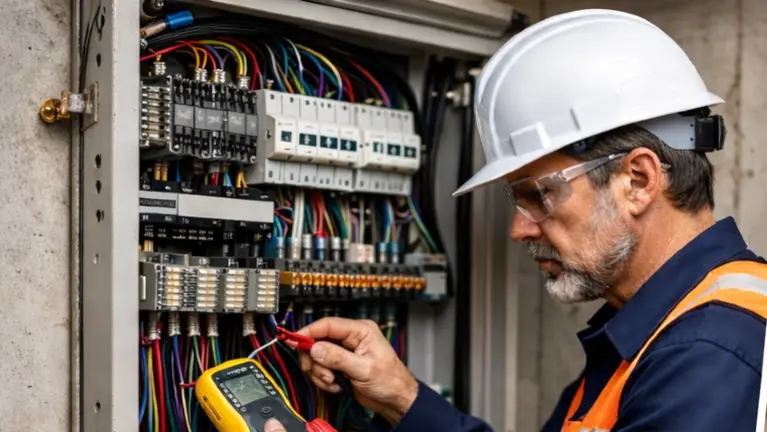
A storm restoration electrician needs the core electrical contractor program, general liability with completed operations, workers’ compensation, commercial auto and contractors equipment, checked for what a storm adds: crews working in other states, temporary help, damaged and wet systems, and contracts signed in a hurry. Settle those questions before the season, not after the storm.
What makes storm restoration work different to insure?
Volume and speed. After a major storm, an electrical contractor may double its workload overnight, send crews to places it has never worked, bring on extra hands and work long shifts on systems that are wet, damaged or partly energized. Every one of those changes reaches the insurance program: more payroll for workers’ compensation, more vehicles and drivers on commercial auto, more equipment in transit and more completed work that has to hold up afterward.
The work itself also carries particular hazards. Flooded panels, damaged service entrances, downed conductors and generators running on site all create shock, fire and injury exposure for the crew and for the people living or working nearby. The OSHA fact sheet on keeping workers safe during disaster cleanup and recovery describes the hazards that come with post-disaster work, and those hazards are the background to everything below.
Which policies does a storm restoration electrician need?
The same core lines any electrical contractor carries. General liability answers when the work injures someone else or damages their property, during the job and after it. Workers’ compensation covers employees hurt on the job. Commercial auto covers the trucks that haul crews, materials and equipment, and contractors equipment covers tools, test gear and generators the business owns.
Storm work rarely needs an entirely different policy. It needs the existing policies to be written for the larger, more mobile operation the business becomes during a response. That is a conversation to have with your agent while the weather is calm, so the changes are already in place when the call comes.
Does your insurance follow your crews to another state?
Partly, and the details matter. General liability and auto policies are often written to respond across a broad territory, but certificates, contract requirements and state rules still need checking. Workers’ compensation is the line most likely to need attention, because it depends on how your policy handles other states, and a few states run monopolistic state funds where coverage comes from the state rather than a private policy.
Licensing is a separate question from insurance. A crew licensed in its home state is not automatically licensed where the storm hit, and some states make temporary arrangements after disasters while others do not. Confirm licensing with the state where the work sits before crews start. Our post on electrician insurance for jobs in other states walks through each of those questions in order.
How are temporary workers covered during a storm response?
That depends on how they come to you. Electricians and helpers you hire onto your own payroll belong on your workers’ compensation, and the extra payroll will be counted when the policy is audited. Workers supplied by a staffing agency are usually covered by the agency’s policy as their employer of record, which you should confirm with a certificate sent by the agency’s agent. Our post on workers’ comp for electrical staffing agencies explains how that split works.
The risky middle ground is the independent contractor paid by the job. If a storm helper is treated as a subcontractor but has no insurance of their own, a workers’ compensation audit may count those payments as your payroll, and an injury on the job may land on your policy anyway. Collect certificates from every subcontractor before work starts, and keep them on file for the whole response.
How should equipment on a staging yard be protected?
Storm responses gather equipment in places it does not normally sit: rented lots, a customer’s parking area, a motel lot near the work. Trucks loaded with wire, meters, tools and generators can sit there overnight for weeks, which raises theft and damage exposure well above what the shop sees in an ordinary month. Our post on copper theft and your property coverage covers how wire and materials are treated when they disappear.
Ask your agent whether your equipment and materials coverage follows property to temporary locations and in transit, and whether rented equipment you pick up for the response is included. Schedule any newly bought generators or tools before they leave the shop, and keep a list of what went to each staging location so a claim can be documented quickly.
What about generators and temporary power?
Storm work often involves temporary power: portable generators at a customer’s site, generators you own and run on your own staging yard, and temporary connections that keep a building or a pump running until permanent service is restored. Each brings fire, carbon monoxide and backfeed exposure. Backfeed is especially serious after a storm, because utility line workers may be restoring the grid while generators are connected nearby.
Generators you own belong on your equipment schedule. Temporary connections you install are your work, so injury or damage they cause later is a completed operations question under general liability. Our post on generator installer insurance covers how generator work is written, including the transfer equipment that keeps a generator isolated from the utility side.
Who answers if a rushed repair fails later?
The contractor that did the work. A storm does not change how general liability treats finished work: if a repair made under pressure later causes a fire or an injury, that is a completed operations claim, and the cost of redoing the faulty work itself falls under the your-work exclusion. Our post on whether general liability covers an electrical fire after the job explains how that tail works.
Speed is where storm crews get into trouble. Skipped inspections, undocumented temporary repairs and connections made on wet equipment all raise the chance of a later claim and weaken the defense when one arrives. Keep the same habits you use on ordinary jobs: photographs before and after, notes on what was temporary and what was permanent, and clear instructions to the customer about what still needs a final repair.
Real-World Scenario: After a hurricane, an electrical contractor sends three crews to a neighboring state to restore service at flooded homes, adding temporary helpers paid by the day. Weeks later, a panel one crew reenergized in a hurry starts a fire, and one of the helpers turns out to have been injured on the job and never reported it. The fire is a completed operations claim under general liability. The helper’s injury becomes a workers’ compensation question that depends on whether the comp policy addressed the other state and whether the helper was on payroll. Checking both before the crews left would have answered both questions in advance.
What contracts come with storm restoration work?
Restoration firms, property managers and utilities that bring in electrical contractors after a storm usually send their own agreements. Expect requests to be named as an additional insured, for primary and noncontributory wording, for a waiver of subrogation and for limits higher than a small shop usually carries. Read the indemnity section closely, because storm agreements are often signed quickly and can shift more risk to the electrical contractor than ordinary work does.
When requested limits exceed the primary policies, an umbrella fills the gap. Our post on when an electrical contractor needs umbrella liability walks through how contract demands trigger that decision. The OSHA standards page for electrical contractors lists the federal standards your crews work under wherever the storm takes them.
What does a storm-ready program cost?
It starts from the same place as any electrical contractor’s program. The owner-approved nationwide ranges we use put general liability for a one-person shop at around $400 to $1,000+ a year and the combined general liability, workers’ comp and auto for a small firm with some employees at around $1,500 to $3,000+ a year. Storm work then moves the number through added payroll at audit, added vehicles and equipment, and the limits restoration contracts ask for; our post on how much general liability costs a one-man electrician explains the factors behind the base range.
What is the next step?
Send a description of your storm work, the states you are likely to travel to and the agreements restoration firms send you with a quote request. We set the program up before the season so the crews, the temporary help and the contracts are covered when the call comes.