

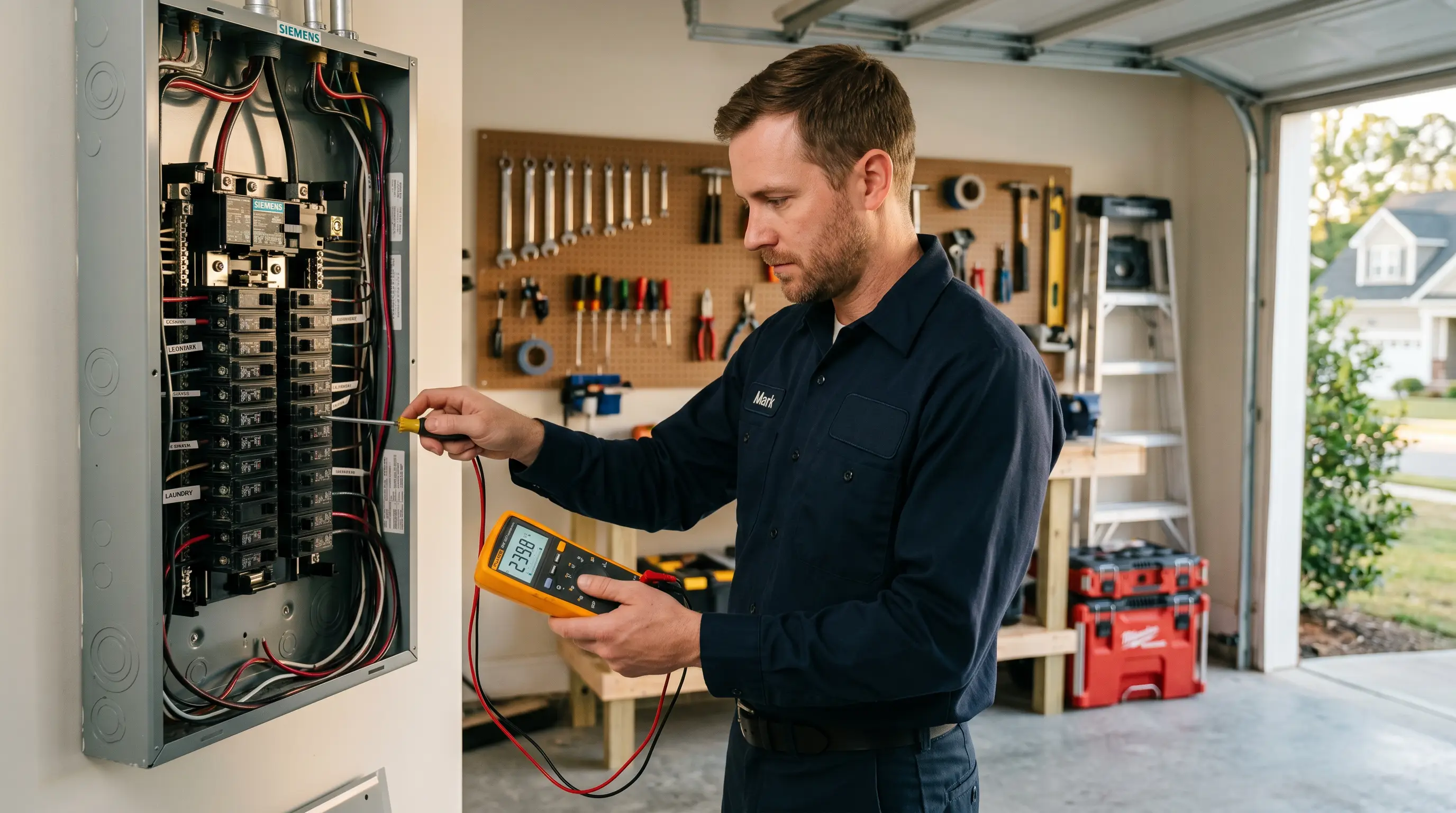
An electrical contractor’s workers’ compensation cost is not a fixed number handed down by the state — a meaningful part of it turns on levers the owner controls: the experience modification factor, accurate class codes, how payroll is classified, a documented safety program, and a return-to-work plan. This post walks those operational levers, and where they stop and the state’s market takes over.
The short version: the national cost guide and the state cost pages own what a state’s market and your payroll drive — the premium floor you mostly inherit. This post owns the other half: the operational levers you actually control, which sit on top of those drivers and move your cost up or down over time. Read the two together — the cost guides for the drivers you inherit, this post for the ones you manage — and see how the coverage itself is built on the workers’ compensation page. Everything here is qualitative; it names no rates, mods, or dollar figures, because those depend on your state, your payroll, and your own loss history.
The seam: what you control versus what the state and your payroll drive
It helps to draw the line cleanly, because two very different things shape a workers’ compensation bill. On one side are the drivers you largely inherit: the state you work in, its regulatory and market environment, the base rates filed for the electrical classifications, and the size of your payroll. Those are the subject of the cost guides, which walk what a given state and a given payroll tend to mean. On the other side — the subject of this post — are the operational levers you manage from inside the business. You do not set the state’s base rate, but you strongly influence how much of it you actually pay, through your loss history, how your work is classified, and how well you prevent and close claims. Keeping the seam straight matters: it is the difference between blaming the market for a number you could move and doing the work that moves it.
The experience modification factor
The single most direct lever is the experience modification factor — the multiplier that compares your business’s loss history to that of similar electrical employers and adjusts your premium up or down accordingly. An employer whose claims run lighter than its peers earns a factor that pulls the premium below the baseline; one whose claims run heavier pays a penalty on top of it. The important thing for an owner is that the mod is not luck — it is a rolling reflection of your actual claims over recent years, which means the safety and claims discipline you run today shows up in your cost tomorrow. It rewards consistency: a clean stretch compounds in your favor, and a bad year follows you for a while. Because it is built from your own history, the experience mod is the clearest proof that workers’ compensation cost is partly something you author. It also means a growing business should watch the mod as it scales, because more payroll and more crews mean more chances for a claim, and the discipline that kept a small shop clean has to scale with the operation rather than get left behind by it.
Accurate class codes and payroll classification
Every payroll dollar in a workers’ compensation policy is assigned to a classification that carries its own rate, and getting those assignments right is a lever most owners underuse. Electrical work, office staff, and different kinds of field work do not all belong in the same bucket, and misclassifying payroll — putting lower-hazard work in a higher-rated class, or the reverse — distorts the premium and invites problems at audit. The goal is accuracy, not gaming: payroll classified honestly and correctly is charged the rate that actually fits the work, and clean records make the year-end audit a formality instead of a surprise. Owners who keep tidy payroll records, separate the classes their carrier recognizes, and document the split give themselves both a defensible audit and a premium that reflects the real shape of their work rather than a worst-case assumption. It is also worth understanding how your carrier treats overtime, subcontractors, and any owners or officers carried on the payroll, because each is handled under its own rules, and getting them wrong is a quiet, recurring source of overcharge or year-end dispute.
A documented safety program
A safety program is where the trade’s severe exposure — shock, arc flash, electrocution — meets the cost of insuring it. The connection runs through claims: the safe-work practices that keep a crew clear of an energized hazard are the same ones that prevent the frequent or severe losses your experience mod is built from. A written program, current training, job-hazard planning, and the records that prove all of it happened do two things at once — they keep people safe, and they steadily bend the loss history that drives your cost. The link to safety is worth reading alongside the OSHA electrical safety post, which walks what the rules require; the point here is the cost one. A program you can document is a program that lowers claims over time, and lower claims are the mechanism behind a better mod and a lighter premium.
Return-to-work: closing claims before they compound
When an injury does happen, how the claim is managed becomes its own lever. A return-to-work program — bringing an injured electrician back on modified or light duty as soon as it is medically appropriate — shortens the life of a claim and limits the lost-time cost that weighs most heavily in your loss history. The alternative, a worker sitting fully out longer than necessary, lets a claim grow and lets it sit on the record that shapes your future cost. Return-to-work is not about pushing anyone back too soon; it is about having a plan, light-duty roles identified in advance, and a working relationship with the medical and claims process so that recovery and cost control move together. Managed well, it is one of the most effective levers an owner has after an incident has already occurred. It also signals something to a carrier: an employer with a real return-to-work process is one managing its claims actively rather than passively, which is exactly the posture that reads well when the account comes up for renewal.
Common mistakes that quietly raise the cost
A few habits work against every lever above, and they are worth naming because they are common and fixable. The first is treating the experience mod as something that happens to you rather than something you build — an owner who ignores it until renewal has already missed years of chances to bend it downward. The second is sloppy payroll records that force a carrier to assume the worst at audit, so honest, lower-hazard work ends up charged as if it were something riskier. The third is a safety program that exists on paper but not in practice, which fools no one and prevents nothing; a binder no crew has read does not lower a single claim. The fourth is letting an injured worker sit fully out with no return-to-work plan in place, so a claim that could have closed quickly instead grows and lingers on the record that prices your next few years. None of these is exotic, and each one sits squarely inside the owner’s control — which is the whole point of thinking about comp cost as levers you work rather than a fixed bill you receive.
Real-World Scenario: Two electrical contractors of similar size work in the same state, with similar payroll and the same filed base rates — so the cost guides would put them in the same neighborhood on the drivers they inherit. One runs a documented safety program, classifies its payroll carefully, and brings injured workers back on light duty promptly; the other keeps its practices informal and lets claims run their course. Over several years their experience modification factors drift apart, and the disciplined shop pays meaningfully less for the same coverage — not because the state treated it differently, but because it worked the levers it controlled. Same market, same trade; the operational discipline is what separated the two bills.
Where the levers meet your coverage
The honest way to think about workers’ compensation cost is as two layers. The bottom layer — the state, its market, the filed rates, and your payroll — is the one the cost guides explain, and it is largely inherited. The top layer is the one this post is about: the experience mod, accurate class codes, a documented safety program, and a return-to-work plan, all of which you control and all of which move your cost over time. Neither layer is the whole story alone, which is why the seam matters — read the cost guides for what your state and payroll drive, and work the levers here for the rest. To see how the coverage itself is built, read the workers’ compensation page and the OSHA electrical safety post on the safety side of the same exposure. When you are ready to price it for your operation, start a quote and tell us how your crews work.