
Hiring and keeping licensed electricians is the hardest part of running an electrical business, and the part that quietly decides everything else. Skilled, licensed hands are scarce, the work is exacting and dangerous, and every crew member’s experience is worth something to your loss record and to your underwriters. How you recruit, train, and retain people is the center of the operation.
The short version: build the licensed-labor pipeline deliberately — apprentice to journeyman to master — recruit steadily rather than in a scramble, train safety from the first day, and lead so good electricians want to stay. That discipline shows up twice: in cleaner safety outcomes and in a more valuable, more durable business. The do electricians need a license post owns the licensing ladder itself; this post owns the hiring, training, and retention playbook built on top of it, and the workers compensation coverage that crew experience keeps clean.
The licensed-labor reality
Begin with the truth of it, because pretending the labor market is easy helps no one. Experienced, licensed electricians are hard to find. The trade asks a lot — technical skill, code knowledge, physical work, and the discipline to stay safe around energized systems — and it competes for the same limited pool of skilled hands every other trade is chasing. Many of the most experienced electricians are aging out faster than new ones are finishing the licensing ladder, so a contractor is often recruiting from a thin field rather than a deep one. That is the environment. It is not a reason for despair; it is a reason for discipline. The owners who struggle most are the ones who only look for people when they are already short-handed, staffing from a standing start under deadline pressure. The owners who do best treat labor as a system to run continuously — always meeting people, always developing the crew they have, always thinking a season ahead. The labor reality does not reward panic; it rewards the contractor who has been building the crew steadily all along, so that a busy stretch or a sudden departure is a manageable event rather than a crisis.
The apprentice-to-journeyman-to-master pipeline
Electrical work is one of the trades with a real, structured ladder, and understanding it is the foundation of every staffing decision. An apprentice works under the supervision of a licensed electrician, accumulating on-the-job hours and classroom training while learning the trade. A journeyman has met the requirements to work more independently, carrying the day-to-day skill the crews run on. A master holds the highest tier and often carries the added responsibility of pulling permits and supervising others. The exact titles, the hour thresholds, and the rules that govern each step vary by state, so the specifics belong to your own jurisdiction rather than a generic description — the do electricians need a license post walks the ladder itself. What matters for staffing is the shape of it: you rarely hire a finished master off the street, because there are not enough of them and they are expensive to lure away. You grow them. The pipeline is the point — an apprentice you bring on and develop safely today is the journeyman who runs a crew in a few years and the master who anchors the business after that. A contractor who thinks of hiring as filling a seat is always short; a contractor who thinks of it as feeding a pipeline is building the crew the business will need before it needs it.
Recruiting licensed electricians in a tight market
Recruiting in a thin market is less about a single great hire and more about a steady habit. The contractors who staff well tend to keep a line in the water even when they are fully crewed — talking to people at suppliers and supply houses, staying in touch with electricians who worked out before, being known in their area as a place worth working. Reputation does a great deal of the recruiting: electricians talk to each other, and a company known for treating people well, paying fairly, and running organized jobs hears from applicants a company with the opposite reputation never does. It also helps to widen the door rather than wait for the finished journeyman who may not be available in your market. Some of the best long-term crew members start as apprentices and are developed in-house, which turns recruiting into a pipeline rather than a lottery — and connecting with local apprenticeship programs and trade schools is one of the most reliable ways to keep that pipeline fed. The point is to stop treating hiring as an emergency response and start treating it as an ongoing function of the business, because in a tight market the contractor who is always recruiting is the one who is rarely desperate.
Training and the safety culture that keeps crews safe
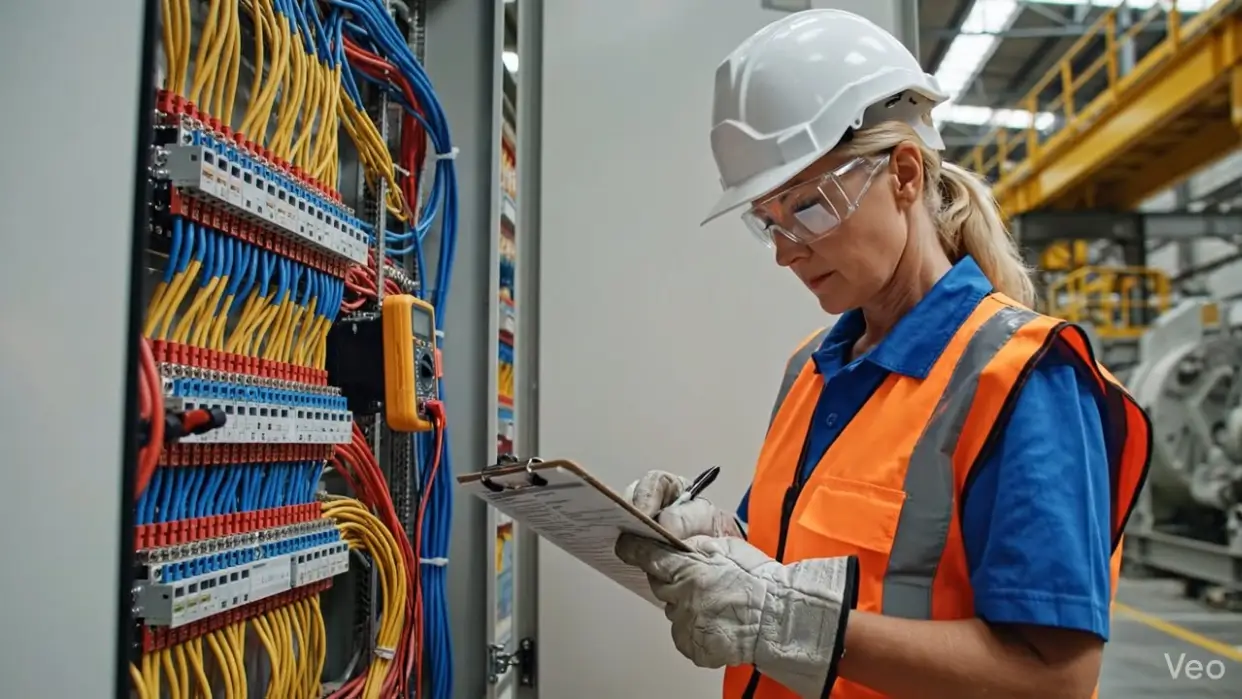
When you bring on a new apprentice, the first investment is safety, and it cannot wait. The energized circuit is unforgiving — shock, electrocution, and arc flash are the signature electrical injuries, and they are severe — so lockout discipline, protective equipment, and the line between qualified and unqualified work matter before production speed ever does. Fall protection and the rest of the general jobsite hazards ride alongside them. Teaching the safety program, the gear, and the judgment before the schedule pressure builds is how you protect the person, protect the job, and protect the loss record the business is rated on. The mechanics are straightforward: pair the new apprentice with an experienced electrician who models the right habits, teach the safety program as the first real skill rather than an afterthought, and make competence something you develop deliberately instead of assuming it will arrive on its own. There is a real tension here, because a green apprentice is slower and needs supervision right when the schedule wants speed. The contractors who resolve that tension in favor of training — who slow down enough to teach safety properly — are the ones who end up with experienced, capable crews and clean loss records. Safety is also a culture, not a binder: crews read whether the people leading the job actually stop unsafe work or just talk about it, and that culture is what makes the training stick.
Wages, benefits, and a path to advancement
Keeping good electricians is partly about pay and partly about everything around it. The pay part is real and cannot be waved away: in a market this tight, an employer that pays unfairly or late loses people to one that does not, and this post names no wage figures because the honest number depends on your market and your crew rather than a chart. But wages alone do not retain electricians who feel stuck or disrespected. The non-wage levers matter just as much — a clear path from apprentice to journeyman to master, active support for license advancement and continuing education, benefits that signal the company is investing in the people, and the everyday respect of organized jobs where crews are set up to succeed rather than to fail. An electrician who can see a future with an employer — the next license, the next level of responsibility, the path to running work — has a reason to stay that a slightly higher hourly rate down the road does not easily overcome. The best owners treat advancement as a deliberate program, not an accident: they tell people what the ladder looks like, they help them climb it, and they promote from within so the pipeline they built keeps producing the leaders the business needs.
Crew leadership and the culture that keeps people
People do not stay for a job; they stay for how the job feels to work. Leadership and culture are what turn a group of hands into a crew that wants to keep showing up, and they are largely within an owner’s control. It comes down to the everyday things: leaders who communicate clearly, set expectations fairly and hold to them, back their crews rather than blame them, and run organized jobs where people are not set up to fail. Respect is not a slogan on a wall — electricians read it in whether the schedule is realistic, whether they are paid fairly and on time, whether their input is heard, and whether the person leading the job actually knows the trade. A strong culture is self-reinforcing: good people want to work with other good people, so a healthy crew becomes its own recruiting tool, while a careless one drives away exactly the electricians a contractor most wants to keep. Safety belongs in this same conversation, because crews notice whether an employer truly invests in keeping them safe or merely talks about it — and in a trade where the risks are this real and this well understood, a genuine safety program is one of the strongest retention signals an owner can send.
Real-World Scenario: Two electrical contractors in the same market run very different shops. One pays fairly, runs organized jobs, trains new apprentices on safety before they work near an energized circuit, shows people the path from apprentice to journeyman to master, and keeps its experienced hands for years. The other pays the minimum, staffs in a scramble whenever a job lands, and churns through green help that never stays long enough to get good or get licensed. When a large commercial project comes up, the first contractor staffs it from a trained, licensed bench and holds its safety standards under pressure; the second throws undertrained hands at energized work and takes the losses that follow. Same trade, same market — the crew the owner built, or failed to build, is what decides how the project goes.
Why retention is a loss-control and an insurance issue
Everything in this post converges on a point worth making explicit: keeping good electricians pays off in the two places an owner cares about most, and one of them is insurance. Start with safety. Experienced electricians carry judgment a new hire has not developed — reading a circuit, sensing a hazard, treating energized work with the caution it demands as second nature — and when turnover is high, that judgment keeps walking out the door and being replaced by inexperience, raising the exposure every time. Retention keeps hard-won safety knowledge inside the business, which is why keeping people is itself a safety strategy. That connects directly to how the business is insured. An electrical account is priced on a severe exposure, and an underwriter assessing it looks hard at how the contractor manages that exposure: crew stability, the experience mix, and the training records all read as signals of a risk being run deliberately rather than one churning through green hands. A retained, experienced, well-trained crew tends to produce fewer and less severe workers compensation claims — the arc-flash burn, the electrocution — which is exactly the loss history a carrier prices. The second payoff is value: a business that depends entirely on the owner and churns through labor is harder to sell and worth less than one with a stable, licensed crew that can run jobs reliably. Crew retention is not a soft goal. It shows up on the loss record today and on the balance sheet tomorrow, which is why it belongs at the center of how an owner runs the business.
Where crews meet your coverage
Crews are the business, and protecting them is inseparable from protecting the company. The labor playbook in this post — recruiting steadily, building the apprentice-to-master pipeline, training safety from day one, paying and leading well, and giving people a path to advance — is how an owner keeps good electricians and keeps them safe. Coverage is what stands behind the crew when someone is hurt despite all of it. The two work together: workers compensation responds to an injured crew member, and the safety-and-retention discipline you build is what keeps those claims rare and your experienced people in place. When you are ready, start a quote and tell us how your crews work, read the do electricians need a license post to see how the licensing ladder underneath your pipeline works, and browse the coverage overview to see how the rest of the program fits around the comp coverage your crew depends on. In a trade this dependent on skilled, licensed hands, the contractor who hires, trains, and keeps people well is not just solving a staffing problem — they are building the safest, most valuable version of the business they can.