

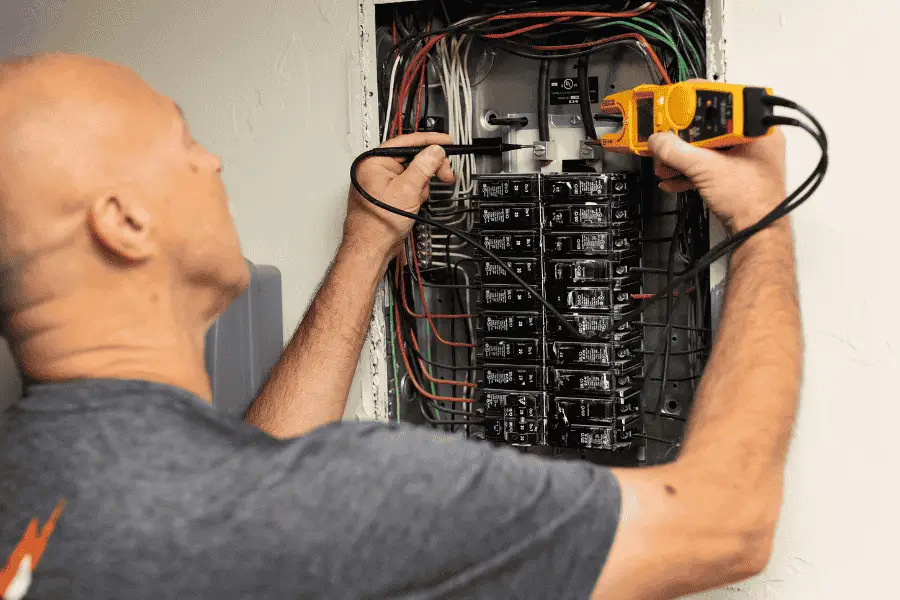
An electrician in Huntington, West Virginia needs general liability with completed operations first, then workers’ compensation once there are employees, commercial auto for the trucks and an equipment policy for tools. For a small service shop, the program grows in stages, and storm and outage work adds its own exposure.
What does a small Huntington electrical shop need first?
General liability. It is the policy that answers when your work injures someone or damages their property, and it is the one customers, property managers and general contractors ask about before they hire you. For an electrician, the completed operations part of the policy matters as much as the coverage during the job, because the work you leave behind stays energized inside walls and panels for years. Our general liability page explains what the policy covers.
A one-truck service shop that does panel changes, troubleshooting and small remodels needs that policy written with a description that matches the work. If you are just starting out, our post on general liability cost for a one-man electrician explains what a small policy usually looks like, and our post on how to start an electrical business covers the order in which the rest of the program usually comes together.
How does the program grow as the shop grows?
In steps that follow the business. The first employee brings workers’ compensation. The first truck titled to the business brings commercial auto. A growing collection of tools, test gear and stocked materials brings contractors equipment. Larger commercial contracts bring additional insured requests, higher limits and often an umbrella.
The risk in this growth is timing. A shop that hires its first helper on a Monday and calls the agent a month later has worked that month without comp in place. A shop that buys a used truck and keeps driving it under a personal policy may find that policy does not respond to a business loss. Call the agency when the change happens, not at renewal, and keep a short note of each change so the next renewal starts from an accurate picture.
How does West Virginia licensing fit in?
West Virginia licenses electricians statewide through the Office of the State Fire Marshal’s Regulatory and Licensing Division, which administers apprentice, journeyman, master and specialty electrician licenses. No electrical work may be performed for hire without a Fire Marshal license and certificate. The Fire Marshal’s Regulatory and Licensing Division is the place to confirm license requirements.
The specialty classes deserve attention. West Virginia’s specialty electrician licenses include HVAC, electric sign, single-family dwelling, elevator and low voltage classes. If your shop works under a specialty license, or employs people who do, tell your agent, because the insurance description should match the work those licenses allow. Our post on sign, alarm and low-voltage contractor insurance covers how specialty work is described, and our post on whether journeyman and master electricians need insurance covers how coverage follows the business the work runs through.
How does storm and outage work change the account?
West Virginia’s mountainous, largely rural terrain stretches distribution lines across long spans, and winter ice storms and summer derechos make outage-driven electrical repair and restoration a recurring part of the work. For a Huntington shop, that can mean bursts of urgent service calls: damaged service masts, weatherheads and meter bases, generator hookups and homes that need to be made safe before power is restored.
That work raises exposure on several lines at once. Crews work long days in poor conditions, often on damaged structures, which reaches workers’ compensation. Work done quickly in difficult conditions has its own completed operations exposure, which reaches general liability. And more time on the road in bad weather reaches commercial auto. If storm work is a regular part of your business, tell your agent so the policies are written for it rather than for a calm season.
How does West Virginia handle workers’ compensation?
West Virginia is a private-market state for workers’ compensation, so an electrical contractor with employees places comp with a private carrier. For a trade with electrocution, arc-flash and fall exposure, the payroll classifications and employers liability sizing matter. The West Virginia state page covers how licensing and comp fit together for West Virginia shops.
A small shop should pay attention to two details. First, how the owner is treated under the policy, which depends on the business structure and the state’s rules, so ask your agent directly. Second, how helpers and apprentices are classified, because their payroll belongs in the class for the work they actually do. Both questions are easier to settle when the policy is written than when the audit arrives.
Real-World Scenario: A two-person electrical shop in Huntington spends a week after an ice storm repairing storm-damaged service entrances. On one job, a reconnected meter base is left with a loose connection, and weeks later it overheats and damages the siding and part of the wall of the home. The homeowner’s insurer pursues the shop. The damage to the home is a completed operations claim under the shop’s general liability. Replacing the faulty connection is the shop’s own cost under the your-work exclusion.
What will customers and contractors ask a small shop for?
Mostly proof. Homeowners may ask whether you are licensed and insured, property managers will usually ask for a certificate of insurance, and general contractors will ask for a certificate plus additional insured status, completed operations coverage and limits written into the subcontract. A small shop that can send a current certificate the same day looks more established than its size, and wins work because of it.
Read every contract’s insurance section before signing, especially on commercial jobs. Requests for primary and noncontributory wording, waivers of subrogation or limits above your primary policy all depend on endorsements and limits that must already be on the policy. An agency that knows electrical work can tell you quickly whether your program meets a request or what it would take to meet it.
How should a small shop handle help from other contractors?
Carefully. During busy stretches, including the weeks after a major storm, small shops often bring in another electrician or a helper on a short-term basis. If that person is not on your payroll, collect their certificate of insurance before they start, and keep it on file. A workers’ compensation audit can count payments to an uninsured subcontractor as your payroll, and a loss caused by an uninsured sub can end up on your general liability.
If the help is on your payroll, even for a few weeks, they belong on your workers’ compensation policy under the class for the work they do. Tell your agent when the crew grows, even temporarily.
What does general liability not do for a service shop?
It does not pay to fix your own work, and it does not cover your own tools, trucks or employees. The your-work exclusion leaves the cost of redoing faulty work to the contractor, while the damage that work causes to other property is what the policy answers. Your tools and test gear need an equipment policy, your trucks need commercial auto, and your employees need workers’ compensation.
It also does not respond to work outside the business description. A shop described as residential service that starts taking commercial tenant work or utility-adjacent jobs should update the description. Our residential electrical services page shows how residential work is usually described.
What should a Huntington electrician bring to a quote?
A short picture of the business makes the quote faster and more accurate:
- The mix of service calls, remodels, new construction and storm or outage work.
- The licenses held by the owner and employees, including any specialty classes.
- Payroll by type of work and the number of people in the field.
- Vehicles used in the business and who drives them.
- Tools, test gear and materials you want covered.
- Loss runs from any current or prior insurer.
Our West Virginia electrical contractor insurance cost guide covers what moves the price for a West Virginia shop. The OSHA electrical overview is a good reference for the safety side of the submission.
What is the next step?
Send your work mix, your license details and the changes you expect this year with a quote request. We build the program around the stage your shop is in now and adjust it as you add people, trucks and storm work.