Electrical insurance by state
Electrical Contractor Insurance in Alabama
Alabama anchors its electrical license in supervision before a policy is written — a dedicated state Board of Electrical Contractors issues the statewide contractor license on documented experience in the design, layout, and direct supervision of electrical construction — and sets that trade against Gulf-coast hurricane exposure around Mobile and inland severe-storm and lightning exposure that keep restoration and service demand steady.
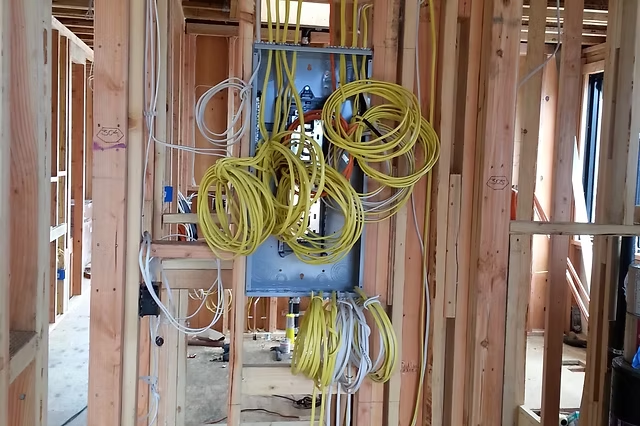

Electrical work in Alabama sits behind a license anchored in supervision and over a storm-exposed grid. The Alabama Board of Electrical Contractors is a dedicated state board, and its statewide contractor license turns on documented experience in the design, layout, and direct supervision of electrical construction — a credential grounded in standing behind finished work, not just installing it. And the trade works over Gulf-coast hurricane exposure around Mobile and frequent inland severe thunderstorms and lightning, where storm-driven outages and heat keep restoration and service demand steady. Put those together and an Alabama electrical program carries a completed-operations weight — finished work supervised under a state license that has to hold through storm stress — that a generic business policy never anticipates.
This page walks the Alabama-specific realities an electrical program has to answer for: the dedicated Board of Electrical Contractors and its supervision-anchored license, the workers-comp picture, the hurricane and storm exposures the work creates, what actually drives cost here, the claims we see, and the major markets across the state. The coverage lines themselves — general liability, workers compensation, commercial auto, contractors equipment, commercial property, umbrella, and professional liability — are covered in depth on their own pages; here the focus is how Alabama changes the emphasis.
The Alabama Board of Electrical Contractors
Alabama licenses electrical work at the state level through the Alabama Board of Electrical Contractors, which issues electrical contractor, journeyman electrician, and provisional licenses. A statewide electrical contractor license requires documented experience in the design, layout, and direct supervision of electrical construction work.
The practical effect for an insurance program is that in Alabama the license is anchored in the design, layout, and direct supervision of electrical construction — which speaks straight to the completed-operations question insurance is built around. A contractor credentialed to supervise finished work is exactly the contractor a project owner expects to stand behind that work, and they still lean on your coverage, your limits, and your additional-insured endorsements before letting you on the job, which is why the general liability program and its additional-insured endorsements sit directly alongside the license here.
Workers Compensation in Alabama
Alabama is a private-market state for workers’ compensation; an electrical contractor places comp with a private carrier, and for a trade with electrocution, arc-flash, and fall exposure the classifications and employers’-liability sizing matter. In Alabama the way payroll splits across residential service, commercial systems, and heavy industrial and Gulf-Coast work drives the rating, and the industrial and coastal work pushes the severity end of the picture. We read the comp program against the real crew mix on the workers compensation page rather than treating it as a flat filing off the state name.
The Hurricane and Storm Exposure
Alabama’s Gulf coast around Mobile faces hurricane and tropical-storm exposure, while the rest of the state sees frequent severe thunderstorms and lightning. Storm-driven outages and heat keep electrical restoration and service demand steady. That coast-and-storm picture drives the exposures underwriters key on:
- Storm-stressed completed operations. Finished work — panels, connections, service equipment — that has to hold through hurricane and severe-storm stress, where a system that fails after the job raises a completed-operations question, answered on the general liability side.
- Coastal restoration. Rebuild-and-reconnect wiring after wind and surge events around Mobile, a recurring book where finished work has to survive the next storm.
- Completed-operations fire. A panel, connection, or circuit — installed or serviced — that fails downstream and starts a fire in a finished building, the products-completed-operations claim this trade turns on.
- Lightning surge and electrocution severity. Year-round surge exposure on service equipment, and the workers-compensation severity that rides every energized job.
What Drives an Electrical Insurance Cost in Alabama
There is no single Alabama price, because premium is driven by your operation, not your ZIP code alone. The cost drivers that matter most here:
- Payroll and crew classifications. The base the comp exposure is rated on, and industrial and energized-work classes rate differently from residential service.
- The work mix. Residential service, commercial systems, and heavy industrial and coastal work each carry a different completed-operations and severity profile.
- Storm-restoration exposure. A book heavy in coastal rebuild-and-reconnect work carries a completed-operations tail that must survive the next storm — an underwriting factor in itself.
- Design-build and specification work. A contractor who designs or specifies systems carries a professional-liability exposure a pure-install shop does not.
- Contracts, fleet, and claims history. The additional-insured and limit terms your industrial and prime work demand, your fleet, and prior losses all move the number.
We price to the real operation rather than quoting a figure off the state name.
Claims We See on Alabama Electrical Work
Described qualitatively, with generic carrier language — every claim is handled by the carrier, never named here, and with no fabricated figures:
- The completed-operations fire loss. A panel or connection serviced months earlier that overheats and starts a fire in a finished building, damaging property that is not the contractor’s — a completed-operations claim the carrier answers under general liability.
- The storm-restoration exposure. Coastal restoration wiring that fails under the stress of the next storm, raising a completed-operations question on finished Gulf-Coast work.
- The restoration-fleet road loss. A service or line truck in an at-fault accident during storm-restoration travel — a commercial-auto claim, distinct from the work itself.
Why Alabama Electricians Choose Electrical Guard Insurance
We write one class — electrical contractors — and we place coverage with carriers that actually want the work. In Alabama that focus shows up in the questions we ask before we quote: how much of your book is Gulf-Coast restoration and industrial work, and what that means for the completed-operations tail through the storm cycle; whether you run residential service, commercial systems, or heavy industrial work, and how the payroll splits for comp; whether you do design-build and carry the professional exposure the standard policy does not answer; and whether your general liability carries the completed-operations and additional-insured terms an Alabama general contractor, developer, or industrial owner will demand alongside your Board of Electrical Contractors license. When a certificate request lands on your desk with requirements you do not recognize, that is a call we take.
We would rather understand the operation than price it off the state name. For an Alabama account that means weighing how much of the book is Gulf-Coast restoration and heavy industrial work, how the payroll splits for comp, and whether design-build carries a professional exposure the standard policy does not answer — then building the completed-operations and additional-insured terms to match. Because the state license is anchored in supervising finished work, and because we write electrical contractors as a single class placed across a specialty panel that wants the work, the completed-operations tail is where the program is built strongest, so storm-exposed finished work is written to hold. The certificate a general contractor, developer, or industrial owner holds answers their requirements the first time out. And because the storm season does not wait for the renewal date, we keep the completed-operations and umbrella structure sized for the restoration and industrial work a Gulf-Coast book can bring all at once — the exposure a generic policy consistently underprices. The supervision-anchored license sets the terms of the program, not a rate pulled off the state name.
Major Alabama Electrical Markets
Alabama is not one electrical market but several, each with its own exposure and operating profile:
Birmingham
The state’s largest metro concentrates medical, financial, and commercial construction alongside an older urban housing base, so a contractor here runs both high-value finished systems and legacy rewiring — two completed-operations profiles under a single state license.
Huntsville and the Tennessee Valley
Aerospace, defense, and research construction drive high-value commercial and controls work, where design-build and specification raise the professional-liability exposure a pure-install contractor does not carry, on some of the highest-value finished systems in the state.
Mobile and the Gulf Coast
Port, shipbuilding, and petrochemical construction sit in the state’s hurricane-exposed corridor, so a contractor here runs heavy industrial electrical alongside a recurring coastal restoration book where finished work has to survive the next storm.
Montgomery
State-government, institutional, and manufacturing construction concentrate commercial and light-industrial electrical, so new-system completed-operations exposure and the additional-insured demands of general-contractor work land together in the capital market.
Tuscaloosa and the west
University, automotive, and manufacturing work mixes high-value institutional and industrial systems with severe-storm exposure, spreading the completed-operations tail across both finished new work and storm-restoration service.
The storm-restoration backdrop
Beneath every metro is the state’s storm exposure itself — Gulf-coast hurricanes and inland severe storms that keep a recurring restoration and service book running statewide, so finished work carries a completed-operations tail that has to hold through storm stress, a profile that follows the weather rather than any one city.
Related reading
Coverage for an Alabama electrical business works as a system. The lines that carry the most weight here are general liability (the completed-operations tail on storm-exposed and finished work) and workers compensation (the crew classifications and the industrial severity), alongside commercial auto, contractors equipment, commercial property, umbrella liability, and professional liability for design-build and consulting work. How the program is written also differs by the electrical work you do across the three service pillars.
Coverage for Alabama electricians
- General Liability Insurance
- Workers Compensation Insurance
- Commercial Auto Insurance
- Contractors Equipment Insurance
- Commercial Property Insurance
- Umbrella Liability Insurance
- Professional Liability Insurance
The electrical work you do
- Residential Electrical Insurance
- Commercial & Industrial Electrical Insurance
- Power Line Contractor Insurance
Get covered
Alabama sources
Frequently asked questions about electrical insurance in Alabama
Do electricians need a license in Alabama?
Yes, statewide. Alabama licenses electrical work through the Alabama Board of Electrical Contractors, a dedicated state board that issues electrical contractor, journeyman electrician, and provisional licenses. A statewide electrical contractor license requires documented experience in the design, layout, and direct supervision of electrical construction work — so the credential is anchored in supervision, not just installation. We build the insurance program to sit alongside that license, naming the contracting entity and the licensed workforce behind it.
Why does Alabama’s supervision-anchored license matter for an electrical program?
Because the statewide contractor license turns on documented experience in the design, layout, and direct supervision of electrical construction — which speaks directly to the completed-operations question insurance is built around. A contractor whose credential is grounded in supervising finished work is exactly the contractor a general contractor, developer, or building owner expects to stand behind that work, and they still lean on your coverage, your limits, and your additional-insured endorsements before letting you on the job. That is why the general liability program and its additional-insured endorsements sit directly alongside the license here.
Does an Alabama electrical business have to carry workers compensation?
Yes. Alabama is a private-market state for workers compensation and requires it for employees; an electrical contractor places comp with a private carrier, not a state fund. For a trade with electrocution, arc-flash, and fall exposure — and heavy industrial work on the Gulf Coast — the crew classifications and the employers-liability sizing matter, and the way payroll splits across residential service, commercial systems, and industrial work drives the rating. We read the comp program against the real crew mix rather than treating it as a flat filing.
What do Alabama’s hurricane and storm exposures mean for coverage?
Alabama’s Gulf coast around Mobile faces hurricane and tropical-storm exposure, while the rest of the state sees frequent severe thunderstorms and lightning, and storm-driven outages and heat keep electrical restoration and service demand steady. For a contractor that means a recurring restoration and repair book after wind and surge events, and finished work — panels, connections, service equipment — that has to hold through storm stress. It shows up in the completed-operations exposure on finished systems and, for restoration fleets, in the commercial-auto and umbrella program.
Why is the completed-operations fire tail such a big exposure for Alabama electricians?
Because the work keeps carrying current after the crew leaves. A panel, connection, or circuit installed or serviced today can overheat, arc, and start a fire in a finished building weeks or months later — and when it does, the third-party building and property damage is a completed-operations claim on the general liability side, not a simple callback. Alabama’s storm stress and its mix of older housing and high-value new construction deepen that finished-work exposure, which is why an Alabama electrical program has to be built with the completed-operations tail front and center.
Do you write electrical insurance across all of Alabama?
Yes. Electrical Guard Insurance places coverage for electrical contractors across Alabama — from Birmingham and Huntsville to Mobile on the coast, Montgomery, and Tuscaloosa — and across the rest of the 48 states we serve. We write residential service electricians, commercial and industrial contractors, and power-line contractors, matched to how the operation actually runs in its part of the state.
Get a quote for your Alabama electrical business
Tell us where in Alabama you work, how much of your book is Gulf-Coast restoration and industrial work, and the electrical work you do — and we will market it to carriers that write the class.