

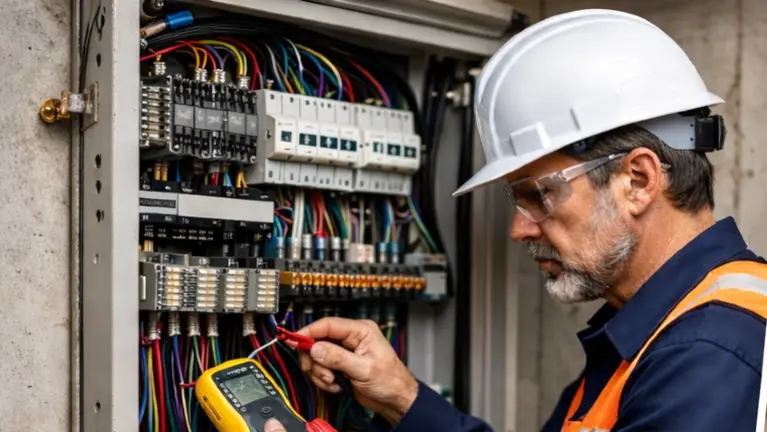
General liability for an electrical contractor in Eagle, Idaho answers when your work injures someone or damages their property, both during the job and after it is finished. For residential and new-construction electricians, the completed operations part of the policy and the contract wording builders ask for matter most.
Why is general liability the core policy for an Eagle electrician?
Because most of the serious claims an electrician faces are third-party claims, and general liability is the policy built for them. A fire that starts at a panel you installed, a homeowner who trips over materials your crew left in a hallway, or a ceiling your crew damaged while fishing wire all land on general liability. The other policies in the program answer different questions: workers’ compensation covers your own employees, commercial auto covers your vehicles, and an equipment policy covers your tools.
For an electrical contractor working on homes and new construction, general liability is also the policy other people ask about first. Builders, general contractors and many homeowners will want to see it before your crew walks onto the site, and the way the policy is written decides whether you can meet what they ask for.
What does general liability cover on residential and new-construction work?
It covers bodily injury and property damage to others that arises from your operations. During the job, that means damage to the customer’s property and injuries to people who are not your employees. On new construction, it also means damage your crew causes to other trades’ finished work, such as drywall, flooring or cabinetry, which is a common source of small claims between trades on the same site.
After the job, the same policy answers through its products and completed operations coverage. An electrician’s finished work stays energized inside walls and ceilings for years, and a fault that develops later can damage the building and its contents. Our post on whether general liability covers an electrical fire after the job explains how that completed operations tail works.
What does general liability not cover?
It does not pay to fix your own work. If a panel you installed has to be rewired because it was done wrong, the cost of rewiring it falls under the your-work exclusion, even when the problem is found because of a loss. The damage that faulty work caused to the rest of the house is a different matter and is what the policy is for. Our post on the your-work exclusion explains where that line falls.
It also does not cover your own property or your own people. Your tools, test gear and materials belong on a contractors equipment policy, your vans and trucks on commercial auto, and your employees’ injuries on workers’ compensation. Idaho is a private-market state for workers’ compensation, so an Idaho electrical contractor places that policy with a private carrier, and for a trade with electrocution, arc-flash and fall exposure the classifications and employers liability sizing matter. The Idaho state page covers how those pieces fit for Idaho shops.
What do builders and general contractors ask for?
Most residential builders and general contractors ask electrical subs for the same handful of things, and each one touches the general liability policy:
- A current certificate of insurance showing general liability in force for the job dates.
- Additional insured status for the builder, and sometimes the owner, on a primary and noncontributory basis.
- Completed operations coverage that continues after the job, sometimes with additional insured status that also applies after completion.
- A waiver of subrogation in favor of the builder.
- Limits at or above the amounts written into the subcontract, often with an umbrella on top.
None of these is unusual, but each one depends on endorsements and limits that must already be on the policy. Our posts on additional insured for electricians and what general contractors require from electrical subs explain each request in more detail.
How should the policy describe the work?
Plainly and accurately. The business description and classification on the general liability policy are what the insurer priced, and they are what a claims adjuster reads when deciding whether a loss arose from the operations the policy insures. An electrician who does service calls on existing homes, rough-in and trim on new construction, and occasional light commercial work should have a description that reaches all of it.
The description also matters when the work changes. A shop that starts taking on solar tie-ins, generator installs or tenant improvements should tell its agent, because each of those carries its own exposure. Our post on tenant finish electrician insurance in Idaho Falls covers how commercial interior work changes the picture for Idaho shops.
What limits do contracts ask for?
That depends on the builder and the project, and the subcontract is where the answer lives. Read the insurance section of every contract before you sign it, and send it to your agent at the same time. If a contract asks for more than your primary policy carries, an umbrella is the usual way to add limit above general liability, auto and employers liability.
Limits are also a judgment about your own risk, not only a box to check for a builder. An electrical fire in a finished home can be a large loss, and the completed operations tail on that home runs for years. Choose limits with the size of a serious loss in mind, then confirm the contract requirements fit inside them.
How does Idaho licensing connect to general liability?
Idaho licenses electricians statewide through the Division of Occupational and Professional Licenses and its Idaho Electrical Board, which licenses journeyman and master electricians and separately licenses electrical contractors. An electrical contractor must be or employ a full-time Idaho master electrician. The Idaho Electrical Board is the place to confirm license requirements.
The license and the insurance are separate requirements, but they meet in practice. Builders will typically ask for both before work starts, and the business name on the license, the policy and the subcontract should match. If the master electrician who qualifies the business changes, tell your agent as well as the board, because the change can affect how the account is presented to the insurer.
Real-World Scenario: An electrical contractor finishes rough-in and trim on a new home in Eagle and moves on to the next job. Months after the family moves in, a connection in a junction box fails and starts a fire that damages a bedroom and the attic above it. The homeowner’s insurer pays the family and then pursues the contractor. The damage to the home is a completed operations claim under the contractor’s general liability. Replacing the failed connection itself is the contractor’s own cost under the your-work exclusion.
How do conditions in Idaho shape the account?
Idaho’s wildfire seasons and cold, snowy winters shape exterior and service work, and long rural distances outside the Boise metro mean electricians often work far from the nearest supply house. An underwriter reading an Idaho electrical account will want to know where the crews work, how much of the work is new construction versus service on existing homes, and how much exterior or rural work is in the mix.
Those questions reach general liability through the work description and the completed operations exposure. A shop that runs feeders to outbuildings, wires wells and pumps on rural property, or does storm and outage repair has a different exposure from one that only wires new subdivisions. Describe the mix honestly, and the policy is far more likely to answer when it is needed.
What should an Eagle electrician bring to a quote?
A short, accurate picture of the business makes the general liability quote faster and more useful:
- Revenue split between new construction, service on existing homes and any commercial work.
- The subcontracts you sign most often, especially their insurance sections.
- Your claims history, with loss runs from your current insurer.
- Your license details and the name of the master electrician who qualifies the business.
If you are a one-person shop just starting out, our post on general liability cost for a one-man electrician covers what a small policy usually looks like.
What is the next step?
Send your work mix and the subcontracts you sign with a quote request. We write general liability around the residential and new-construction work you actually do and check the policy against your builders’ requirements before the next job starts. The coverage overview shows how the other lines fit around it.