

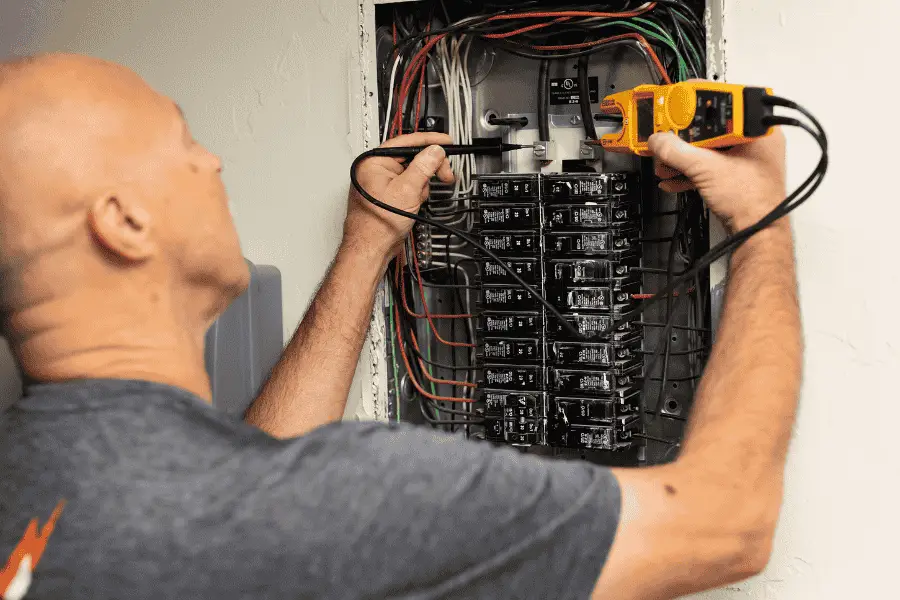
Two Michigan realities meet on a lot of service calls here: long, hard winters that stress electrical systems, and an older urban housing stock whose dated wiring surfaces the moment a panel is opened. Together they define much of the work a Michigan electrician does — and much of the completed-operations exposure a carrier prices.
Michigan also runs a full statewide license ladder, so a carrier reads credentialed labor as well as the work. Once it knows the workforce and the kind of wiring you handle, the cost is built from the same drivers that decide what any electrical contractor pays. This guide walks those drivers in roughly the order they matter for a Michigan shop.
Why Michigan’s hard winters and aging wiring shape the cost
Michigan’s long winters bring hard freezes and heavy snow and ice, which stress service equipment and drive standby-power and service-upgrade work, and the older housing stock across Detroit, Flint, and the state’s established metros often carries dated wiring that surfaces during service and repair work. For a carrier those two facts matter because they concentrate the completed-operations question: re-energizing or upgrading a legacy panel puts the quality of your terminations and connections on the line for years. That work is real revenue read through the completed-operations lens, and it makes your workmanship-and-inspection record a driver the carrier weighs closely.
Why there is no published price for Michigan electrical insurance
A premium is the output of an underwriting model, not a sticker. The carrier takes your specific exposures — how many people you employ and what they do, the revenue behind your finished work, your loss history, and the limits your contracts require — and prices each line against them. Change any input and the number moves. For an electrical contractor the cost is built mostly from two things: the crew exposed to electrocution, arc-flash, and fall hazards, and the fire tail on the panels and connections it leaves behind. The Michigan Department of Insurance and Financial Services oversees the state’s insurance market, but the price still comes from your operation, not a regulator’s table — a posted average would only mislead, because a residential service electrician and a power-line contractor draw very different pictures. For the market and regulatory overview behind these drivers, see our Michigan electrical contractor insurance page — this guide is the cost companion to it.
Crew payroll and the arc-flash-exposed workforce
Payroll is usually the single biggest driver for an electrical contractor, because it scales both your workers compensation and a large part of your general liability. It is not just the size of the payroll — it is which work it covers. Electrical work carries genuine injury severity: crews work on energized equipment, face arc-flash and electrocution hazards, and work at height, which is why the Occupational Safety and Health Administration treats electrical safety as a defining regime and why the industry works to the NFPA 70E arc-flash standard. Michigan is a private-market comp state, so an electrical contractor places comp with a private carrier, and documented safety discipline is read as closely as headcount.
The LARA license ladder and your labor mix
Michigan runs a statewide electrician licensing program through the Department of Licensing and Regulatory Affairs, Bureau of Construction Codes, as its electrical licensing information sets out; it registers apprentices and licenses journeyman electricians, master electricians, and electrical contractors, with the contractor credential required to operate a business. That ladder is a cost input in a way owners often miss: the mix of apprentice, journeyman, and master labor on your crews shapes both your payroll composition and the risk profile a carrier reads, because supervised, credentialed work correlates with the workmanship quality that limits completed-operations claims. The ladder is a labor-cost shaper, not a premium line.
The completed-operations fire tail — the work you leave behind
Your revenue is a rating basis for general liability, but the exposure that defines the electrical class is completed operations — the work you leave behind. A panel, connection, or circuit keeps energizing after your crew is gone, and a loose termination or latent fault can overheat and start a fire weeks or months after the job closes, becoming a serious third-party property-damage claim. The completed-operations side of general liability is the signature line built to answer for it, and because installed electrical work — especially the legacy-panel work common across Michigan’s older metros — carries such a long tail, your revenue and workmanship record are inputs a carrier weighs closely. This is the electrical contractor’s defining cost driver, and it is why a carrier reads the products-completed-operations aggregate on your general liability as carefully as the per-occurrence limit — that aggregate is what stands behind the legacy panels and upgrades a Michigan shop leaves energized across the state.
Real-World Scenario: A Detroit residential electrician runs panel upgrades and rewires in older homes where dated wiring surfaces on nearly every call, while a Grand Rapids commercial contractor wires new build-outs under contracts that demand additional-insured status and higher limits. Both leave energized work behind, but the underwriter reads them differently — the residential crew’s exposure rides the completed-operations fire tail on legacy panels, the commercial contractor’s on larger systems and contract limits. Same Michigan, same LARA ladder — but the work mix prices from two different pictures.
Standby power, service upgrades, and Michigan winter demand
Michigan’s winters do more than make the work harder — they shape the demand a shop sees. Hard freezes, heavy snow, and ice down lines and stress service equipment, which drives standby-generator, transfer-switch, and service-upgrade work as homeowners and businesses try to keep power through the cold. For an electrical contractor that seasonal surge is real revenue behind fire-tail-bearing work, and it tends to arrive in waves rather than evenly across the year, so a carrier reads both the volume and the variability when it looks at the operation.
That winter work also concentrates on exactly the aging service entrances Michigan’s older metros are full of. Upgrading a dated panel to carry a generator interlock or a heavier service means re-terminating and re-energizing legacy wiring, and the completed-operations quality of that work has to hold through years of hard seasonal cycling. It is precisely the kind of job where a carrier’s attention to the workmanship-and-inspection record pays off, because the difference between a clean upgrade and a rushed one may not show up until a cold snap loads the system.
The seasonal pattern reaches the property and equipment lines too. A shop that ramps up for winter demand may stage more generators, transfer switches, and material on hand, which is exposure the commercial property and contractors’ equipment lines answer for, and a carrier prices those to the real value a shop carries through its busy season rather than a slow-month snapshot. Describing how your Michigan demand swings across the year is part of getting the whole program sized to the operation.
Service, commercial, and power-line — the work-mix driver
The kind of electrical work you do moves the number as much as how much you do. A residential electrical service and remodel operation carries a fire profile driven by panel upgrades, rewires, and fixture work. A commercial and industrial contractor carries larger systems, additional-insured and higher-limit contract demands, and the design-build professional liability exposure. And a power-line contractor sits at the severe end — energized line work, bucket-truck fleets, and the arc-flash and electrocution severity that make it among the highest-rated classes there is. Same trade, genuinely different cost conversations.
Trucks, equipment, copper, and the coverage stack
Beyond the crew and the completed work, a carrier prices what you drive and own. Commercial auto covers the vans, service trucks, and bucket trucks hauling crews and wire, and it grows with your rolling stock. Contractors’ equipment — inland marine — covers the testers, meters, benders, lifts, and wire spools on the jobsite and in transit. And commercial property answers for the shop and the copper, panels, and materials staged inside it — a real theft-and-damage exposure and a genuine premium factor. Whether you carry the products-completed-operations aggregate your revenue calls for, add the umbrella limits a contract demands, and set your limits to the contracts you sign all feed the number. The full coverage overview shows how each line fits together.
How to get an accurate Michigan quote
The path to a real number is to describe your real operation. Tell a broker your apprentice-through-master credential mix, your crew payroll and the work it covers, your revenue and the kind of electrical work you leave behind, how much of your book is aging-wiring and service work, your service-versus-commercial-versus-power-line mix, your trucks and equipment values, your arc-flash and claims history, and the limits your contracts require. From there a carrier with genuine electrical appetite can price it. When you are ready, start a quote and tell us how your crews work, or see the Michigan electrical contractor insurance page for the market and regulatory picture behind these drivers. The number at the end will reflect your business, which is the only number worth having.