
There is no published price for electrical contractor insurance in Iowa, and a figure quoted before an underwriter has seen your crew is a guess. A carrier builds the number from the operation — the credential ladder your crews are staffed across, the payroll and codes behind them, how much of your book follows the weather, and the record of how your finished work has held up. This guide walks those drivers the way an Iowa underwriter tends to.
Iowa is a state to read from its license ladder outward, because few states define as many tiers — and that granularity flows straight into how you staff, how you code payroll, and how precisely a carrier can read your account. The Iowa electrical contractor insurance page carries the market and regulatory overview; this guide is the cost companion.
Iowa’s class-based license ladder as a labor-cost map
Iowa licenses every electrical trade statewide through the Iowa Electrical Examining Board inside the Department of Inspections, Appeals, and Licensing, and the ladder is unusually detailed — apprentice and residential electrician, Class B and Class A journeyman, the corresponding master classes, and an electrical-contractor business license on top. That is more than a credentialing quirk; it is a map of your labor cost. How your crews divide across those tiers sets your payroll composition and the supervision an underwriter reads as workmanship, and Iowa makes those tiers explicit where most states blur them. The ladder never appears as a line on the policy, but it gives a carrier an unusually precise read on how the work you leave behind is likely to perform.
Open country, wind, and winter — the loss-seasonality driver
Iowa’s weather writes itself into a contractor’s revenue and loss runs. Cold winters bring snow and ice, and severe storms and high winds cross the state’s open terrain, both stressing overhead lines and building systems and keeping repair and restoration work steady. The revenue behind that storm-and-winter work is something a carrier reads directly. But because restoration is energized work done under time pressure — often in cold or wind, on damaged gear — it is where loss activity concentrates, so the part an underwriter actually prices is the claims record from that work rather than the weather itself. A clean book through a hard Iowa winter is one of the few levers fully in your control.
Crew payroll and the hazard each class code rates
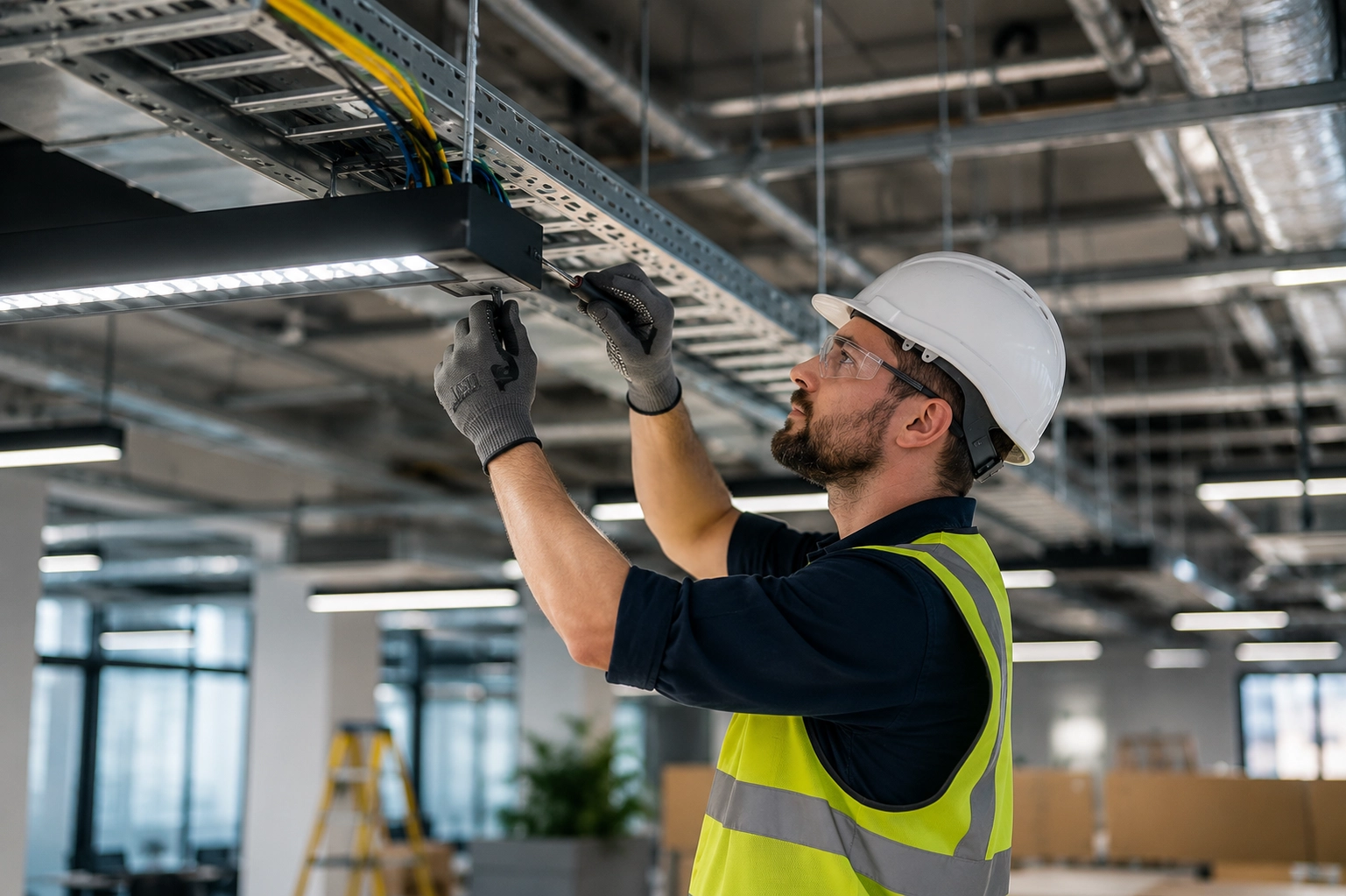
Payroll is the rating basis for workers compensation and a large share of general liability, and in a class-rated state like Iowa the code on that payroll matters as much as the total. Electrical crews work energized, meet arc-flash and electrocution risk, and work at height, which is why the Occupational Safety and Health Administration treats electrical work as a defining safety regime and why careful shops run to the NFPA 70E arc-flash standard. The detailed ladder that shapes your labor also shapes your coding: split your service, new-construction, and line-work payroll across the right classes and the rating tracks the real hazard. Because Iowa places comp in the private market, the employers-liability limit — answering injury suits outside the comp bargain — is one an underwriter sizes on purpose for an arc-flash-exposed crew.
The fire tail: what the finished work keeps doing
The exposure that defines the class is completed operations — the installed work that keeps living after the crew leaves. A panel, a connection, or a circuit stays energized once you close the job, and a loose lug or a latent fault can overheat and start a fire weeks or months later, landing as a third-party property claim. General liability’s completed-operations side is the part built to respond, so an Iowa underwriter reads your installed revenue and your inspection record as leading inputs — the long tail is why this line, more than any other, defines the electrical class. Watch the products-completed-operations aggregate specifically; on a book heavy with ag-facility, processing, and finished residential installs it often needs to sit above the per-occurrence limit.
Farm, town, and line work — the Iowa work-mix spread
Two Iowa contractors of the same size price differently depending on what they run. A residential service and remodel shop lives on the completed-operations fire profile — panel swaps, rewires, and fixtures in occupied homes and small-town service routes. A commercial and industrial builder — including the ag-facility and food-processing work common across the state — carries larger systems, additional-insured and higher-limit demands, and design content that pulls in a professional exposure. A power-line contractor sits at the severe end, where energized line work across open country and bucket trucks push the arc-flash and electrocution rating to the top. The mix, not the revenue alone, sets the program’s shape.
When design content brings in professional liability
For the Iowa shops that engineer as well as install — the commercial and industrial contractors, and the ag-processing specialists laying out a system rather than wiring to another firm’s drawings — professional liability closes a gap the standard lines leave open. A load calculation, a specification, or a design decision that later causes a loss is a financial claim, and general liability’s bodily-injury-and-property-damage trigger does not reach a pure design error. A shop bidding design-build across the Des Moines and Cedar Rapids markets carries that exposure whether or not it buys the coverage, so a carrier reads the design content of your book as its own driver. Wire strictly to plans and it is light; put your name on the design and it is real.
Rolling stock, staged copper, and the property line
The rest of the program prices what moves and what stays. Commercial auto rates the vans, service trucks, and bucket trucks that carry crews and wire across long rural distances. Contractors’ equipment — inland marine — follows the testers, benders, lifts, and wire spools that travel with the work. Commercial property answers for the shop and the copper, panels, and gear staged inside it, a genuine theft-and-damage exposure in a materials-heavy trade. When a contract demands more limit than your primary carries, the umbrella sits on top. The coverage overview shows how the moving and fixed lines fit an Iowa program.
Building an accurate Iowa number
An accurate quote is a well-described operation. Give a broker your payroll and the classes your crews hold, your installed revenue and the finished work behind it, your service-commercial-line-work mix, your fleet and equipment values, your arc-flash and claims record, and the limits your contracts demand — the market and its regulatory backdrop sit with the Iowa Insurance Division. From there a carrier with real electrical appetite can price it. When you are ready, start a quote, or read the Iowa electrical contractor insurance page for the market picture behind these drivers. The number at the end will describe your business — the only number worth carrying.